
You know how frustrating it is when a perfectly good slab starts sinking toward the foundation. The structural integrity is fine, but the dropping elevation creates a massive trip hazard.
We lift sunken concrete back into place across the Hartford area instead of tearing it out. CT Pro Concrete Leveling uses modern techniques to restore driveways, garage floors, and patios quickly.
If you want the mechanics of the newer approach, how the foam process works covers it step by step.
This guide breaks down the data behind polyurethane vs mudjacking to help you choose the right repair.
The Two Ways to Lift a Slab
Both methods fill the empty voids underneath settled concrete to lift the surface back into a level position. The difference is entirely in what gets pumped down into the ground.
Here are the primary components of each leveling technique:
- Mudjacking: This older method uses a thick slurry made from Portland cement, sand, water, and topsoil.
- Polyurethane Injection: This newer method uses high-density closed-cell structural foams like the AP Lift series.
Contractors refer to the older method as mud pumping or slabjacking. The hydraulic pressure of the dense cement mixture physically pushes the concrete upward.
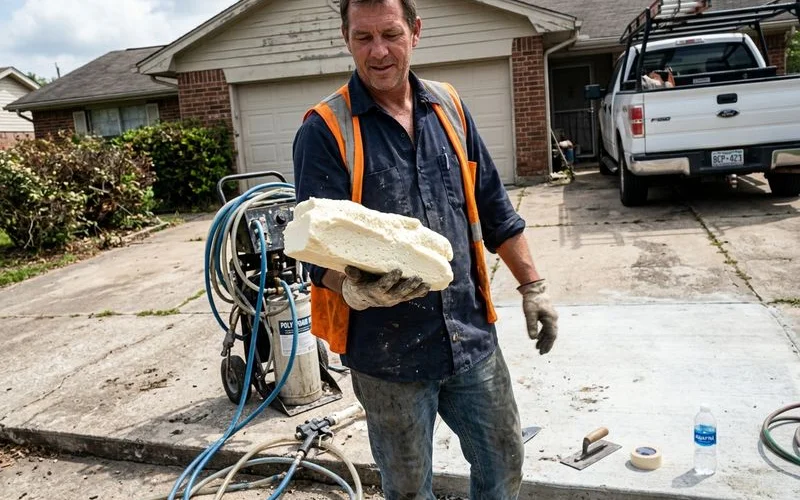
We use the polyurethane method because the geotechnical foam expands up to 24 times its liquid volume. The rapid expansion packs tightly against the soil to raise the slab with incredible precision.
The following sections provide a detailed slab jacking comparison to highlight where each method succeeds.
Weight: 4 lbs Against 120
Polyurethane foam weighs between 2 and 6 pounds per cubic foot, while mudjacking slurry weighs roughly 120 pounds per cubic foot. This massive weight difference dictates which method survives on weak soils.
The ground under your slab has already failed under the weight of the concrete alone. Mudjacking answers this failure by adding 100 to 140 pounds of dense cement and dirt to that same exact spot.
Hartford County properties often sit on poorly compacted backfill or expansive clay soils. Asking this compromised ground to support an extra ton of cement slurry is a recipe for future settling.
Foam adds virtually nothing to the subgrade load. Our typical residential driveway lifts add only a few dozen pounds to the entire footprint. A traditional slurry repair on that same driveway could easily add thousands of pounds of dead weight.
Hole Size: What You Live With Afterwards
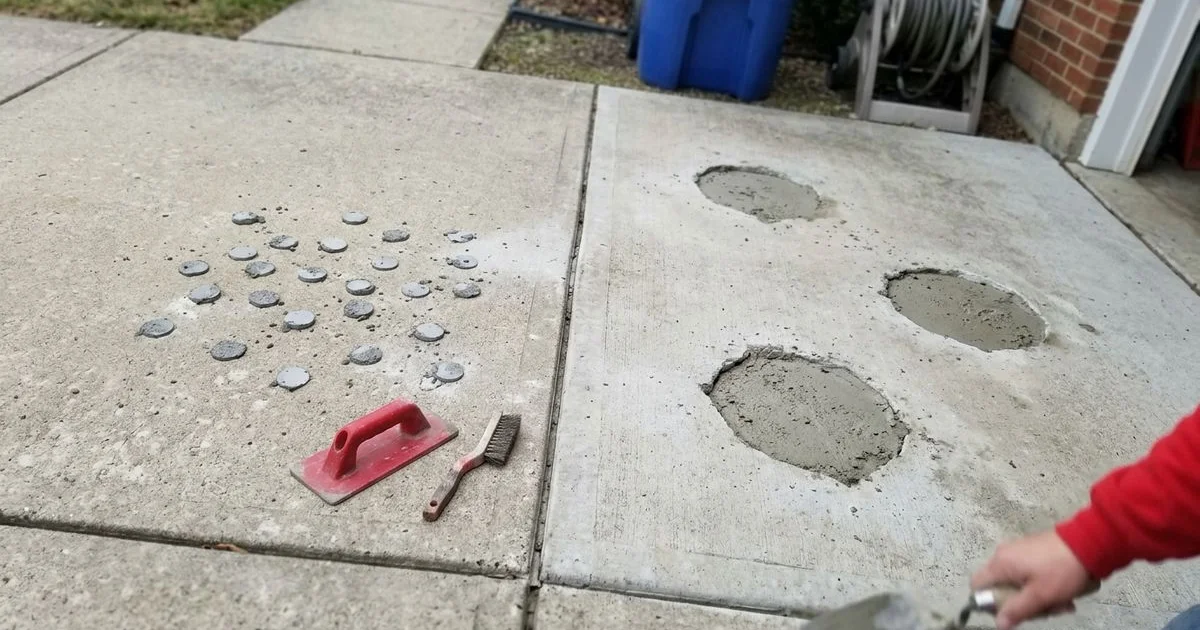
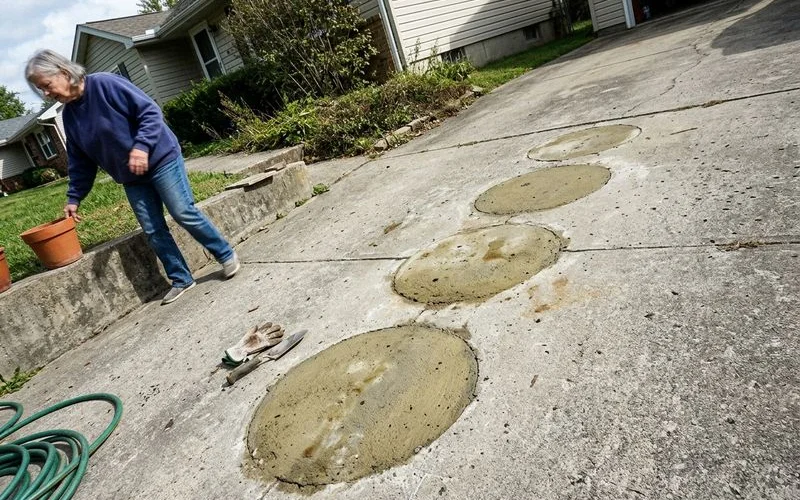
Mudjacking requires drilling injection holes measuring 2 to 3 inches wide, while polyurethane goes in through small 5/8-inch ports. The visual aftermath of these repairs is drastically different.
Slurry is incredibly thick and requires massive volume to create pressure. A mudjacking crew must drill holes roughly the size of a soda can bottom to force the cement mixture underground.
Both methods require the contractor to patch the injection sites. A 2-inch patch on a weathered driveway creates a highly visible circle. The cement patch will weather completely differently than the surrounding original concrete.
Polyurethane injection uses a port roughly the diameter of a penny. A 5/8-inch patch is practically invisible unless you actively hunt for it on the ground.
Preserving Decorative Concrete Surfaces
Small injection ports give you a major advantage on stamped or colored flatwork. We place the 5/8-inch foam ports directly inside grout lines or pattern joints. The eye already expects a break in these exact locations.
Large slurry holes cannot fit into narrow grout lines. The 3-inch mud patches will permanently ruin the aesthetic of a high-end decorative patio.
Cure Time: Minutes or Days
Polyurethane foam cures to load-bearing strength in just 15 to 30 minutes, whereas cement slurry needs 24 to 72 hours. This difference dictates how quickly you can safely use your property again.
The two-part polymer creates an exothermic chemical reaction that hardens almost instantly. High-density formulations routinely support up to 14,000 pounds per square foot within half an hour. A driveway leveled with foam jacking vs mudjacking generally takes a car the exact same day.
Our crews often see homeowners parking on their freshly leveled driveways before the trucks even leave the neighborhood. The fast curing process eliminates extended disruptions.
Cement slurry requires an extended curing process. That waiting period is not a flaw in the mudjacking material itself. It is just the reality of how Portland cement hydrates and hardens.
The Impact on Commercial Operations
For a homeowner, a 72-hour cure time means a long weekend of annoying street parking. For a commercial site, that same delay creates a massive financial headache.
Closing a loading bay or a store entrance for three days hurts revenue. Foam leveling allows a business to reopen an affected area during the exact same shift.
Washout: Will the Repair Survive the Cause?
Polyurethane is hydrophobic and chemically inert, meaning it will never wash away. Mudjacking slurry is porous and can easily erode if water flows underneath the slab.
Water is usually the primary reason your concrete settled in the first place. Heavy rains carry the fine soil materials out from underneath the slab over several years. Hartford receives roughly 47 inches of average annual rainfall, making washout a constant local threat.
Mudjacking fills the resulting cavity with a cement-and-soil mixture that is not waterproof. If the original underground water path remains active, the new slurry will erode exactly like the old base did. This is how a slurry repair quietly undoes itself in 3 to 8 years.
A mudjacking repair on wet ground is temporary. The unsealed dirt and cement mixture will eventually dissolve in high-moisture environments.
Polyurethane actively displaces water as it expands. The cured structural foam will not absorb moisture or degrade over time. The same rainstorms that created the first void cannot dissolve the polymer.
Neither material fixes the actual water source. If a broken downspout discharges directly at your slab edge, the water will carve a brand new cavity next to the filled one. Any honest contractor will tell you to extend your gutters to protect the repair.
Side by Side
Comparing the technical specifications side-by-side reveals exactly why the modern polymer approach outperforms traditional slurry.
| Factor | Mudjacking | Polyurethane foam |
|---|---|---|
| Material weight | ~120 lbs per cubic foot | 2-6 lbs per cubic foot |
| Hole size | 2-3 inches (highly visible) | 5/8 inch (penny-sized) |
| Cure to load-bearing | 24-72 hours | 15-30 minutes (up to 14,000 lbs/sq ft) |
| Behavior in water | Porous, erodes in 3-8 years | Hydrophobic, displaces water |
| Reach into small voids | Limited by slurry viscosity | Expands rapidly into the space available |
| Decorative surfaces | Large patches, ruins aesthetics | Ports hidden in grout lines |
| Typical upfront cost | Often 25% to 40% lower | Higher initial investment |
| Equipment access needed | Large hydraulic pump and mix setup | Compact mobile rig plus hoses |
Where Mudjacking Still Makes Sense
Mudjacking remains a sensible and cost-effective spend for massive, low-value slabs resting on highly stable soil. The older method often costs 25% to 40% less than modern polymer injections.
We do not offer mudjacking services, so you can treat this advice as the opposite of a biased sales pitch.
A traditional slurry repair makes perfect financial sense for a heavy agricultural farm apron, an industrial utility pad, or a back-lot storage area. In these specific scenarios, the visual appearance of 3-inch patch marks is completely irrelevant.
If the slab is not carrying a load that needs immediate restoration, the 72-hour cure time costs you nothing. The material is much cheaper by volume.
The Limits of Slurry
Mudjacking has a very long and proven history. The industry has been lifting slabs with cement for decades, and there are plenty of dry, stable jobs from the 1990s still sitting exactly where they were put.
The older technique struggles exactly where most Hartford County residential flatwork sits. Finding a mudjacking alternative hartford county depends on whether the slab needs to carry a vehicle again quickly. Slurry also fails on decorative patios where patch size matters, and on slabs resting over wet clay that is constantly moving.
What This Means for Your Quote
A noticeably cheaper mudjacking quote requires you to evaluate the true long-term cost of the repair. You must compare the total impact on your property, not just the initial price tag.
The cheapest upfront option loses its value if the heavy cement slurry fails. When reviewing a quote, always factor in these hidden costs:
- The likelihood of repeating the repair if the heavy slurry sinks.
- The financial cost of losing access to your driveway for 72 hours.
- The permanent damage to your home’s curb appeal from 3-inch patch holes.
Our team will walk through all of these factors with you during a precise on-site inspection. The technician evaluates the actual soil stability and moisture levels underneath your specific slab.
If the honest answer is that your stable concrete does not require the premium polymer method, we will tell you exactly that. Finding the right solution matters more than pushing a specific product.
If you want the specific details for a residential vehicle surface, driveway leveling has the complete breakdown. You can also get a written quote and a concrete expert will put real numbers against your property rather than discussing general cases.