
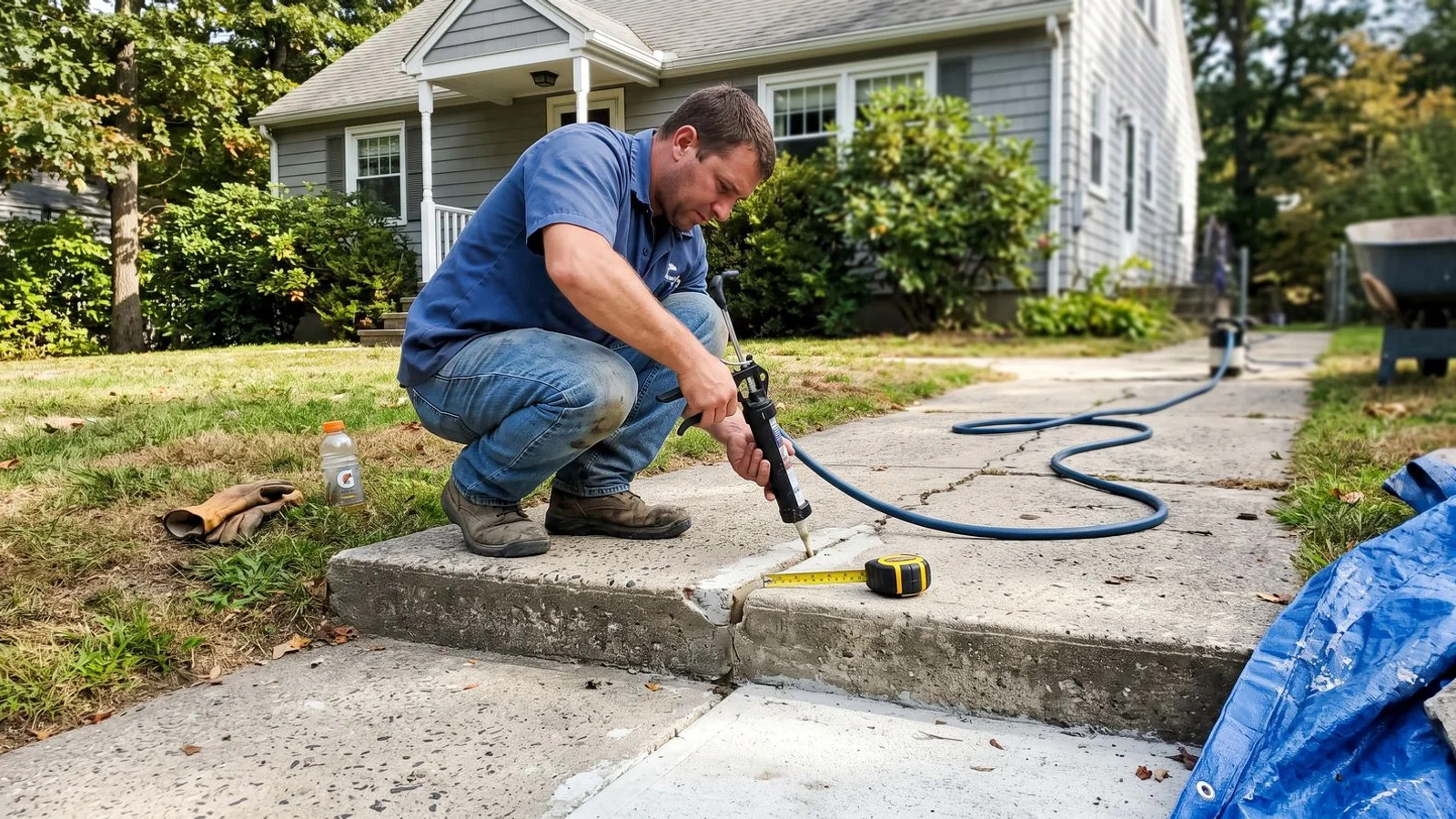
Trip Hazards on Walkways Removed, Usually in a Single Visit
Leveling uneven private walkways, stepped joints and trip hazards on paths, entries and shared access routes.
- CT registered & insured
- Free written quote
- Same-Day Use on Most Jobs
-
CT HIC Registered
CT Dept. of Consumer Protection
-
Fully Insured
General liability cover
-
Same-Day Use on Most Jobs
Foam cures in 15-30 min
-
Free Written Quote
On-site inspection, no charge
Have you noticed that one stubborn walkway slab in your front yard getting a little higher every winter? You are definitely not the only homeowner in Hartford County looking into sidewalk & walkway leveling to fix this frustrating issue.
A tiny lip can quickly become a serious trip hazard for your family and guests.
Our team at CT Pro Concrete Leveling lifts sunken concrete back into place across the Hartford area instead of tearing it out. Grab a cup of coffee, and I will show you exactly how to fix these stepping paths permanently.
What Is Walkway Leveling?
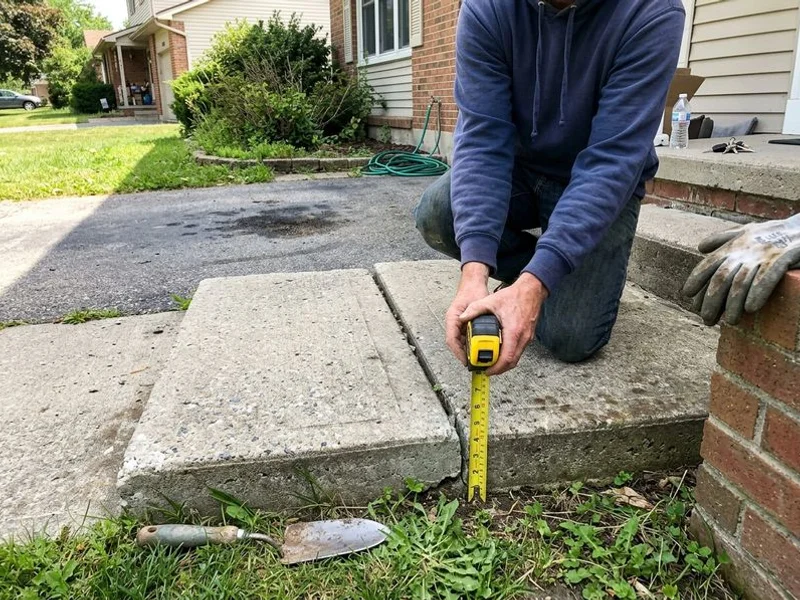
An uneven walkway joint rarely fixes itself. The cavity underneath grows larger every winter, causing the slab to step a little further into the ground.
Once the lip is big enough to catch a toe, it becomes a genuine liability. This exposure sits squarely with the property owner, especially on rental or shared access paths.
Our walkway leveling service brings those low slabs back flush with their neighbors using high-density polyurethane injection. This is the exact same process used on heavy driveways, just scaled down for smaller residential paths.
Here is what makes this method so effective for residential paths:
- Lightweight Material: Polyurethane foam weighs only 2 to 4 pounds per cubic foot.
- Zero Subgrade Stress: Traditional mudjacking adds over 100 pounds per cubic foot to your already failing soil.
- Fast Cure Times: The foam reaches 90% strength in just 15 to 30 minutes.
- Same-Day Use: Your path is ready for foot traffic almost immediately.
We carefully control the lift with small injection ports to ensure the joint perfectly aligns. If the offset is small enough that grinding makes more economic sense, I will tell you that directly.
Why Walkways Step Rather Than Sink Evenly
A typical walkway consists of a run of separate slabs, with each one sitting on its own individual patch of ground. Water eventually finds a path under one of them and washes the fine soil away.
That specific slab drops into the void, while its neighbor stays firmly in place.
Our brutal Connecticut weather cycle then steps in to accelerate the damage. The joint between the slabs instantly becomes a dangerous step due to three main factors:
- Heavy Annual Rainfall: Connecticut averages around 47.3 inches of precipitation annually.
- The 9% Expansion Rule: Trapped water expands by about 9% when it freezes during cold nights.
- The Lever Effect: This expansion exerts immense pressure that forces the underground cavity wider.
The subsequent thaw lets the slab drop further into the newly expanded space. Repeat this process through a single Hartford County winter, and a tiny quarter-inch lip becomes a serious tripping hazard.
Uneven Walkway Problems We Fix
A Stepped Joint on the Front Path
The classic version of this problem is a run of front path slabs where one has clearly sunk down. Visitors usually discover this sudden drop in the dark.
It is almost always the joint nearest the street or nearest the front steps that goes first. Water naturally concentrates in these specific areas.
We define a serious issue based on standard safety guidelines from the government.
The Americans with Disabilities Act specifically defines a tripping hazard as any vertical change over a 1/4-inch in height.
If your front path has a lip larger than a quarter of an inch, it requires immediate attention to keep your guests safe.
A Shared Walkway at a Rental Property
This presents a different problem with the exact same physics, but the financial stakes change dramatically. A stepped joint on a common walkway at a two- or three-family home is an owner’s direct liability.
A hazard that has been documented and ignored is materially worse in court than one that just appeared. Connecticut premises liability law requires owners to address hazards they know about or reasonably should have known about.
Our state also has a strict two-year statute of limitations for personal injury claims like slips and falls. Hartford’s rental market is incredibly competitive in 2026, making proactive property maintenance essential for protecting your investment.
Multiple Offsets Along One Run
Once a path starts moving, it rarely stops at just one single joint. Property owners often find that four or five joints have each stepped a little bit over time.
The entire path reads as generally uneven rather than having one obvious fault line. This requires a comprehensive run-level fix instead of just tweaking a single slab.
High-density polyurethane foam spreads out up to six feet from a single injection point beneath the soil. This wide expansion radius allows our team to stabilize multiple slightly-stepped joints along a single run efficiently.
We measure the entire length of the walkway to ensure everything flows together smoothly. Trying to spot-treat one sunken slab when the whole path is wavy will just create new uneven spots next door.
A Slab Pushed Up by a Root
This looks like the exact same problem from a distance, but the root cause is entirely different. If a slab is sitting high beside a mature oak or maple tree, you are dealing with root heave.
This upward biological pressure is fundamentally different from a washed-out void. Lifting the adjacent concrete does absolutely nothing to fix the underlying tree issue.
Here are the clear signs that tree roots are causing your concrete problems:
- Proximity: The raised slab is within ten feet of a large, mature tree.
- Spider Cracks: The concrete surface is actively cracking and splintering outward from a central high point.
- No Voids: Sounding the concrete reveals solid earth underneath instead of an empty, hollow echo.
We always point this out during the initial inspection so you know exactly what is happening. You will likely need a tree specialist or complete concrete replacement to properly resolve root-heave problems.
Edge Grinding or Walkway Lifting: the Honest Version
For a genuinely small offset on a path that is otherwise sound, grinding the lip off is a completely reasonable answer. The path must not be actively moving for this to be a permanent fix.
Grinding leaves an altered surface finish with exposed aggregate where the concrete material came off. It successfully removes the hazard and generally costs between $10 and $20 per linear foot.
Here is a quick look at how the two options compare:
| Feature | Concrete Grinding | Polyurethane Lifting |
|---|---|---|
| Average Cost | $10 to $20 per linear foot | 50% to 70% less than replacement |
| Best Used For | Tiny lips under 1/4-inch | Slabs still settling into voids |
| Visual Finish | Exposed, rough aggregate | Original smooth concrete surface |
| Root Cause Fix? | No, just treats the symptom | Yes, stabilizes the soil below |
Where grinding stops being appropriate is when the slab is still actively settling into a void. It is also a bad idea when the offset is so big that grinding would take a serious amount of material off the surface. If the same path has several joints doing the same thing, you are just grinding the symptom off a slab that will step again next winter.
Because our team does not sell grinding services, there is no reason for us to talk you out of it when it is the right call.
What a Walkway Leveling Job Looks Like
We measure every single offset along the run, rather than just looking at the one spot you called about. Sounding each individual slab with a specialized tool tells us exactly where the hidden cavities are located.
Our technicians establish one clear target level for the entire project before any work begins. A walkway lift is extremely fine work compared to a heavy driveway repair.
The final target is a perfectly flush joint. Overshooting the lift creates a brand new lip in the opposite direction.
Here is the exact process for a typical residential walkway repair:
- Drill the Ports: We drill tiny 5/8-inch holes beside the joint, which are about the size of a dime.
- Fill the Void: The high-density injection fills the empty space beneath the slab first.
- Controlled Lift: We raise the low slab in small increments while checking it against a straightedge laid across the joint.
- Clean and Patch: The ports get patched with cement, and the path gets swept clean.
The entire path is ready to take normal foot traffic within 15 to 30 minutes of completion.
Trip Hazard Liability for Landlords and Multi-Family Owners
Comparing the affordable repair cost against the massive expense of one trip-and-fall claim is not a close contest. This financial reality is why this is one of the few concrete jobs booked strictly on risk rather than on appearance.
Connecticut follows a modified comparative negligence rule for slip and fall accidents. This means a tenant could be partially at fault for wearing bad shoes, but the property owner can still be held heavily liable for the uneven concrete.
To keep your properties safe and compliant, our commercial leveling service offers several distinct advantages:
- Portfolio Scoping: We evaluate entire property portfolios in a single visit.
- Itemized Quotes: Each address receives a separate price so you can make informed decisions.
- Zero Demolition: A shared path is only out of use for a few hours instead of multiple days.
- Photo Documentation: We provide clear before-and-after photos for your insurance records.
Work gets scheduled together to keep travel costs down and tenant disruption as short as possible.
How Much Does Walkway Leveling Cost?
Walkways are quoted by the run rather than the slab, because lifting one section flush to a neighbor that has also settled just moves the lip along the path. We set a target level for the whole run and price against that.
Single Joint
One stepped joint on an otherwise sound path.
Smallest job
- Targeted lift on the low slab
- Usually a short single visit
- Path back in use the same day
Path Run
A front or side walkway leveled as a complete run.
Most common
- Whole run brought to a single target level
- Every offset in the run removed, not just the worst one
- Void filled beneath each lifted slab
- Joint sealing recommended on completion
Multi-Property
Several rental or association properties scoped in one visit.
Portfolio scope
- All properties assessed on a single trip
- Each address itemized separately on the quote
- Work scheduled together to minimize tenant disruption
What Moves the Number on Your Quote
- Number of slabs in the run that need lifting
- Height of the offsets being removed
- Void volume beneath each settled section
- Whether root heave is involved, which changes the scope entirely
- Access on rental or multi-family property, and tenant scheduling
- Joint sealing on completion to keep water out of the base
Custom per-project quote based on slab count, lift height and void volume.
The inspection and the quote are free, and the quote is the price.
Why Choose Us for Walkway Leveling?
A Berlin-based crew, a method built for Connecticut ground, and a written recommendation you can hold us to.
Fastest Job We Do
Walkway lifts are usually a few hours with the path back in use the same day. On rental property that means almost no disruption to tenants.
We'll Say When to Grind
For a very small offset on an otherwise sound path, edge grinding is the economical fix and that's what we'll recommend, even though it isn't a service we sell.
Root Heave Diagnosed Honestly
A slab pushed up by a live root won't stay down after a lift. We'll tell you that and point you at what actually solves it rather than selling a fix that fails.
Leveled as a Run
Lifting one slab flush to a neighbor that has also settled just moves the lip along the path. We set one target level for the whole walkway.
Built for Landlord Liability
Shared walkways and common entries carry owner exposure. We scope portfolios in one visit and document the before and after condition.
Cheapest It Will Ever Be
The void grows every winter and so does the lip. A small offset now costs less to fix than the same one in three years, and far less than a claim.
Our Walkway Leveling Process, Step by Step
Most residential jobs are a few hours on site from arrival to cleanup.
Measure the Run
We measure every offset along the path, not just the one you called about, and set a target level for the whole run.
Diagnose the Cause
Settlement over a void lifts well. Root heave doesn't. We tell you which you have before quoting a lift.
Lift to Flush
Small ports, controlled injection, and each low slab brought back level with its neighbors.
Patch and Reopen
Ports patched, path swept, and it takes foot traffic within minutes of the last injection.
Want a real number for your walkway leveling?
Free on-site inspection, free written quote, and an honest answer on lifting versus replacing.
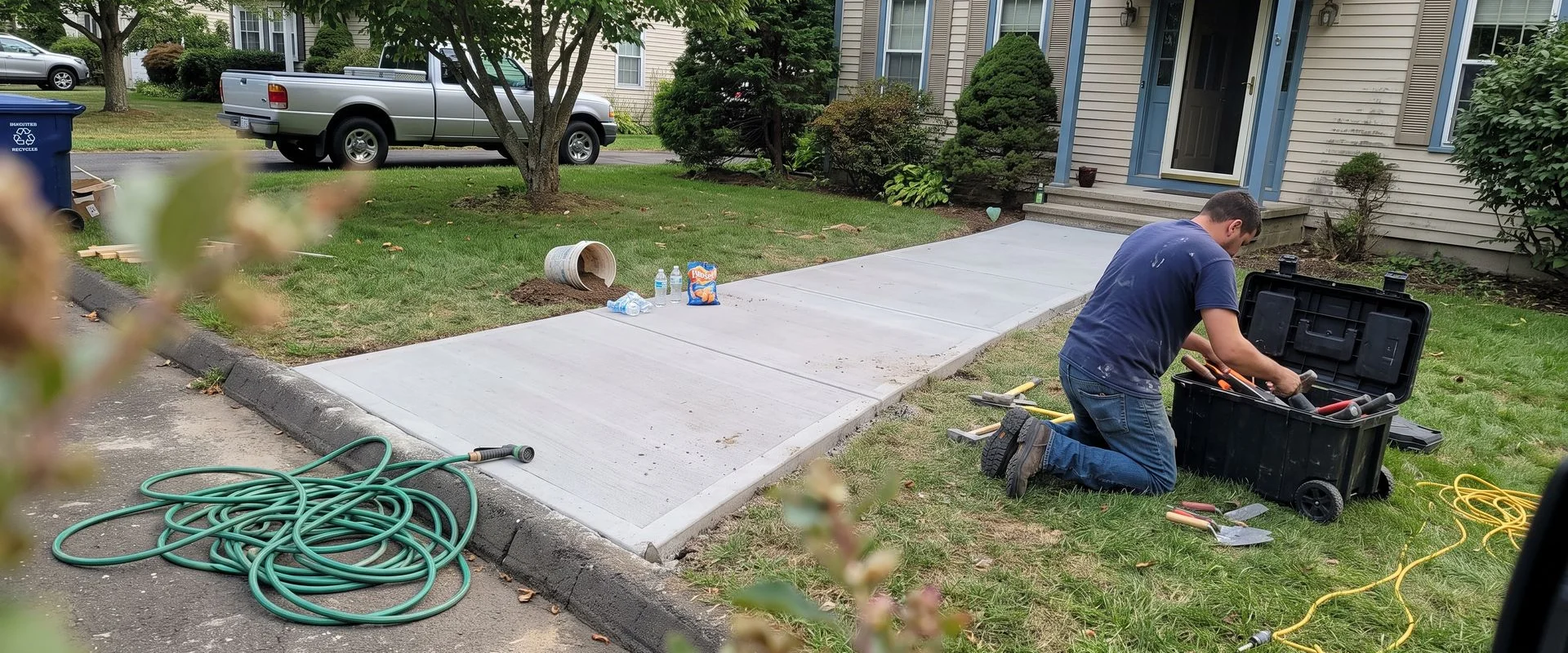
Walkway Leveling: What the Job Looks Like
Click any image to enlarge.
Before and After a Lift
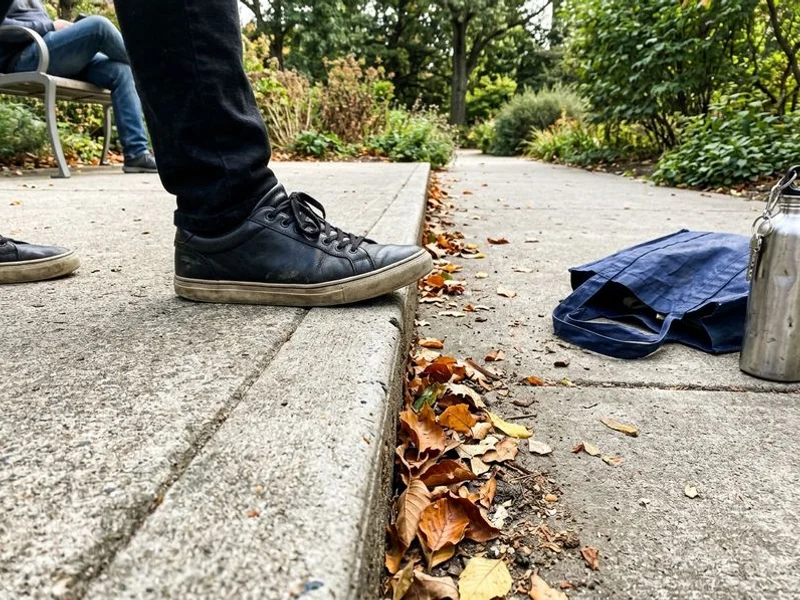
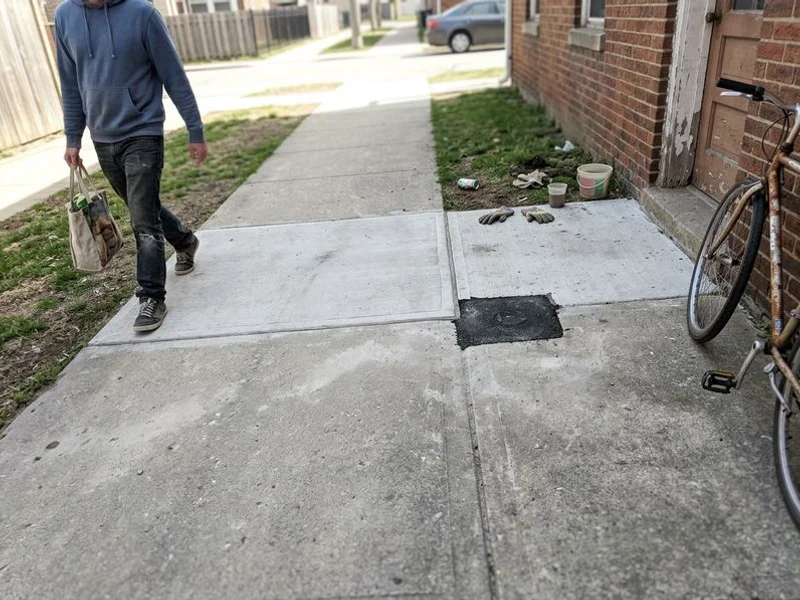
Walkway Leveling: the same slab, lifted back to grade
Fixing a Trip Hazard: Options Compared
| Factor | Replace the Slab | Polyurethane Lifting |
|---|---|---|
| Time on site | Days including cure | Hours |
| Path out of use | Until the pour cures | Same day |
| Matches surrounding slabs | New concrete stands out | Original surface kept |
| Fixes the void underneath | Only with proper re-compaction | Yes, filled as part of the lift |
| Disruption to tenants | Access blocked for days | A few hours |
| Cost | Full replacement pricing | A fraction of tear-out |
Walkway Leveling: Questions We Get Asked
How big does a lip have to be before it matters?
Smaller than most people expect. The ADA trip hazard threshold on an accessible route is a quarter inch of vertical change, and anything between a quarter and half an inch has to be bevelled. Private paths aren't held to that standard, but it tells you how small a lip has to be before it counts as a hazard. If you can feel it underfoot walking normally, it's worth dealing with, and it will only get bigger.
Will an uneven joint settle down on its own?
No. The void underneath grows with every freeze-thaw cycle, so the offset increases rather than stabilizing. A joint that stepped a quarter inch this winter will step further next winter. That's the practical argument for fixing it while it's cheap.
Is grinding cheaper than lifting?
For a very small offset on an otherwise sound path, yes, and that's what we'll tell you. Edge grinding removes the lip but does nothing about the cavity underneath, so if the slab is still settling the lip comes back. Grinding isn't a service we sell, which is exactly why our recommendation on it is worth something.
A tree root has lifted my walkway. Can you fix that?
Not by lifting, and we won't pretend otherwise. Foam addresses voids, not upward pressure from a live root. Tree root heave needs the root managed by an arborist, or the section replaced. Telling settlement from heave is straightforward on site: settled slabs sit low over a cavity, heaved slabs sit high near a tree.
Am I liable if someone trips on my property?
Premises liability on private and shared walkways generally sits with the owner, and a hazard you knew about and left weakens your position considerably. For landlords and multi-family owners that's the whole reason this work gets booked. Repair cost against the cost of a single claim isn't a close comparison.
How disruptive is the work for tenants?
Minimal. Walkway lifts are usually a few hours, the path takes foot traffic within minutes of the last injection, and there's no demolition, debris or dumpster. Most tenants notice the work more than they're inconvenienced by it.
Can several properties be done at once?
Yes, and portfolio owners usually should. Everything gets scoped in one visit, each address is itemized separately on the quote, and the work gets scheduled together so there's a single mobilization instead of five.
Do you only lift the bad slab, or the whole path?
We set a target level for the whole run. Lifting one slab flush to a neighbor that has also settled just relocates the lip a few feet along the path. The quote shows which slabs are being lifted and to what level.
Will the repair match the rest of the walkway?
It's the same concrete you already have, so yes. The only new marks are patched 5/8-inch ports. A replaced slab, by contrast, is fresh concrete sitting next to weathered concrete and it shows for years.
Should I seal the joints afterwards?
On a walkway that has already had a void under it, yes. Open joints are how surface water gets into the base in the first place, and sealing them after a lift keeps the cavity from reforming. It's the cheapest work we do and it's usually done in the same visit.
Still have a question?
The on-site inspection answers it properly. We look at your actual slab and put the answer in writing, and it's free either way.
Related Services
Steps & Stoops
Lifting front steps and stoops that have dropped at a corner or pulled away from the house.
Patios & Pool Decks
Lifting settled patio slabs, tilted porches and pool surrounds that have dropped or pitched.
Commercial
Slab repair for retail, office and small industrial properties: entrances, walkways, loading areas and warehouse floors.
Ready to Book Walkway Leveling?
Free on-site inspection and written quote across Hartford County. If your slab isn't a lifting candidate, we'll tell you that instead of selling you one.
- No demolition, landscaping intact
- Same-day use on most jobs
- CT registered & insured