
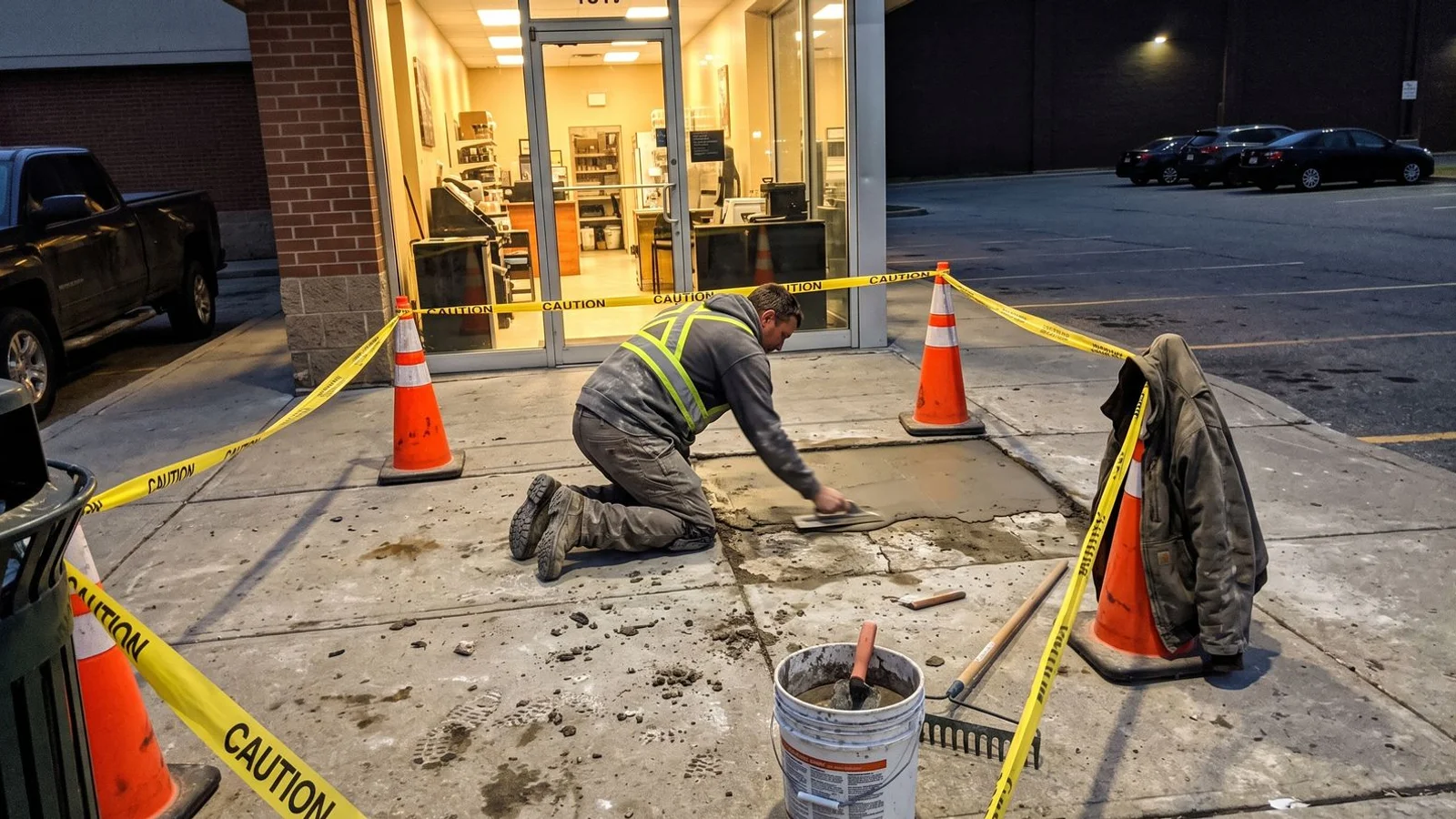
Commercial Slab Repair Without Closing the Site for a Week
Slab repair for retail, office and small industrial properties: entrances, walkways, loading areas and warehouse floors.
- CT registered & insured
- Free written quote
- Same-Day Use on Most Jobs
-
CT HIC Registered
CT Dept. of Consumer Protection
-
Fully Insured
General liability cover
-
Same-Day Use on Most Jobs
Foam cures in 15-30 min
-
Free Written Quote
On-site inspection, no charge
What Is Commercial Concrete Leveling?
Have you ever looked at a sunken concrete entrance outside your business and wondered if commercial concrete leveling is the right solution?
The invoice for a traditional concrete replacement is rarely your only expense, as lost revenue from a closed entrance or a blocked loading bay hits your bottom line much harder.
We see this exact scenario every week across the Hartford area, where a full concrete repour takes an important area out of service for days. A modern foam lift takes just a few hours.
Our team can easily schedule this work after you close or over a weekend, so your site keeps operating. This process involves injecting lightweight polyurethane foam, which weighs just 2 to 4 pounds per cubic foot, through 5/8-inch holes to gently lift the slab.
Where the underlying problem is a washed-out cavity carrying real equipment loads, void filling and stabilization is scoped as part of the same job. We will walk you through exactly how this works.
Why the Downtime Argument Usually Decides It
Let’s run the numbers on a busy retail entrance. A traditional repour means loud demolition, messy disposal, setting forms, and pouring new concrete. Your main door might be closed or diverted for a full week while you wait for the slab to cure, and every single day of closure has a painful revenue number attached to it.
We offer a much faster alternative. A commercial foam lift on that same entrance only requires cordoning off a small section for a few hours. The polyurethane foam reaches load-bearing strength in just 15 to 25 minutes after the last injection.
You can schedule the repair after closing time, and your site opens normally the next morning. This rapid turnaround is why local businesses approve commercial concrete leveling on operational grounds far more often than on price, even though the price comparison still heavily favors lifting over a complete replacement. Here is a quick breakdown of how foam lifting compares to a traditional repour:
| Feature | Polyurethane Foam Lift | Traditional Repour |
|---|---|---|
| Cure Time | 15 to 25 minutes | 24 to 48 hours minimum |
| Material Weight | 2 to 4 lbs per cubic foot | 150 lbs per cubic foot |
| Business Disruption | A few hours (can be done overnight) | Multiple days of closure |
Commercial Slab Problems We Fix
We handle a wide variety of settling issues that disrupt daily operations and create safety risks. In commercial environments, concrete slabs often range from 4 to 8 inches thick and carry immense weight. Here are the most common concrete problems local businesses ask us to solve to protect their customers and employees.
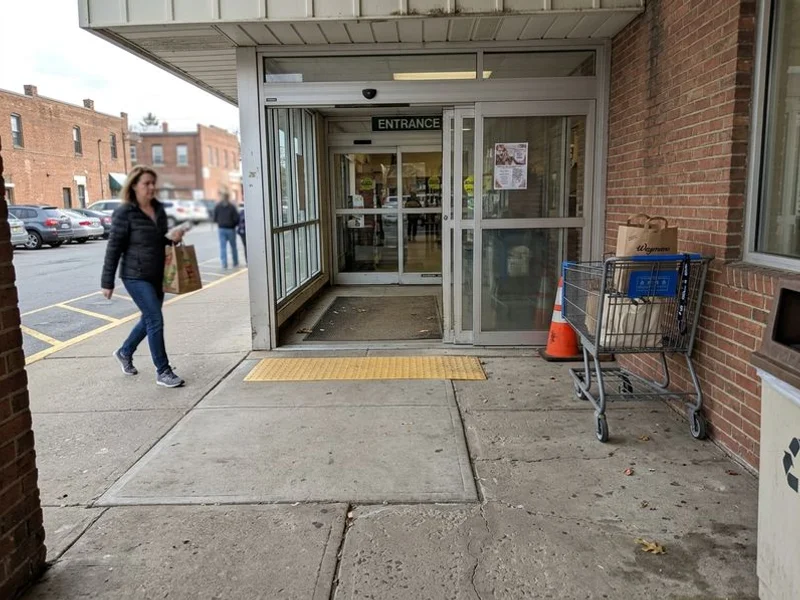
A Stepped Joint Across an Entrance
Public foot traffic over a vertical offset is a serious liability exposure with a clock ticking on it. The federal Americans with Disabilities Act (ADA) Title III guidelines are very specific about these hazards.
Our safety assessments align with these strict federal standards. The ADA states that any vertical change of 1/4 inch or greater on a walking surface is officially a trip hazard.
These are not just cosmetic issues. Fixing a 1/4 inch gap on an accessible route is a mandatory compliance requirement that comes with strict deadlines attached.
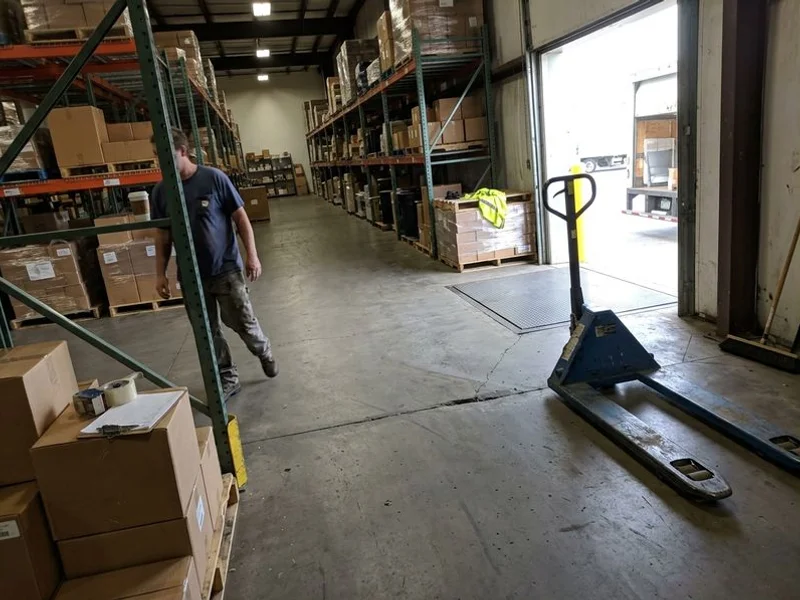
Warehouse Floor Dips Under Equipment Traffic
A pallet jack or forklift crossing a dipped joint takes a harsh shock load with every single pass. The heavy cargo it carries absorbs that same damaging impact.
We often hear operations managers raise this as an expensive equipment problem before anyone calls it a concrete problem. Routine forklift wheel damage and suspension repairs cost facilities thousands of dollars a year.
Ignoring these dips creates severe safety risks for your operators.
A 2026 industry report noted that the direct costs of a single workplace forklift accident average around $38,000, not including indirect costs.
Loading Dock and Approach Settlement
The concrete apron at the building line settles much like a residential garage apron does. Backfill against the foundation slowly compacts or washes out over time.
Our commercial clients face massive logistical headaches when this happens. A sunken approach creates a dangerous step at the threshold that affects multiple operations:
- Delivery trucks back in at the wrong angle.
- Pallet jacks catch on the uneven concrete edge.
- Heavy cargo experiences damaging impacts.
When a slab drops just two inches, a standard 48-inch high dock leveler can no longer safely connect with delivery trailers. This single drop in elevation brings loading operations to a grinding halt.
Parking Area Settlement
Sunken parking bays create massive puddles of ponding water after every rainstorm. Uneven sections keep dropping between expensive asphalt resurfacings.
We see property owners waste money repaving because the weak soil base underneath was never actually treated. Leaving these sunken areas untreated also invites costly slip and fall claims from customers.
Business insurance data shows that the average slip and fall premises liability claim costs a commercial property owner around $20,000. That figure does not even include potential reputational damage or indirect legal fees.
How Commercial Concrete Leveling Runs on an Operating Site
The site assessment always comes first, and it involves much more than just looking at the concrete. We walk your entire site to sound the slabs and map out the hidden voids underneath.
The project managers also take the time to learn your specific daily operating pattern. The team needs to know when your entrance is busiest, when large deliveries land, and which loading bays can be temporarily closed.
After gathering this information, we provide a detailed, phased scope of work. This clear plan includes sectioned work areas, a safe access route, and a sequence that keeps your facility actively trading. Here is what you can expect on the day of the job:
- Safety cones, barriers, and clear signage go up around the first small section.
- Technicians drill penny-sized, 5/8-inch injection ports into the sunken slab.
- High-density foam is injected to carefully raise the concrete back to a level position.
- The ports are patched, the equipment moves to the next section, and the first area is ready for traffic.
For warehouse floors, this phasing runs bay by bay around your existing pallet racking. Racking that genuinely has to be cleared is identified during the initial assessment, not discovered as a surprise on the day of the job.
Because the specialized foam reaches load-bearing strength in minutes, you rarely have to wait long to resume normal operations. The most common question about reopening is usually “which shift” rather than “which day.”
ADA Trip Hazard Compliance and Documentation
Where a dangerous trip hazard has been flagged on an accessible route, the remediation needs to be highly defensible as well as properly completed. We photograph and record the exact before and after conditions as a standard part of the job.
Your facilities management file will have all the necessary evidence showing the 1/4-inch hazard was fully eliminated. Insurance certificates and our CT Home Improvement Contractor registration are provided before the first truck arrives.
We never want you to have to chase down this paperwork after somebody asks for it. If your internal approval process needs these documents lodged in advance, simply let us know at the site assessment.
Commercial Slab Repair vs Replacement: When to Repour
A successful foam lift requires structurally sound concrete to push against. If a commercial slab is heavily spalling, delaminating, or fracturing into tiny pieces, a lift will simply not work. Our estimators will always tell you honestly if a full repour is the right call, even though it is the more disruptive and expensive option.
You need solid sections of concrete that can move as a unified piece to get a level result. Fortunately, shattered concrete makes up a very small minority of what we evaluate in the field during a typical week.
Most commercial slabs in Hartford County consist of perfectly fine concrete sitting on unstable ground. The soil simply washed out or compacted from under the heavy slabs, which is precisely the problem that fast, lightweight foam lifting is designed to solve.
Give our Hartford office a call today to schedule your commercial concrete leveling assessment, and let us get your site back to a safe, level grade.
How Much Does Commercial Concrete Leveling Cost?
On a commercial site the invoice is rarely the real cost. The closed entrance, the blocked loading bay and the lost trading days are. Quotes here account for scheduling and phasing as much as for square footage.
Entrance / Walkway
Trip hazard remediation on entrances and accessible routes.
Common scope
- Sectioned work area, rest of the frontage stays open
- Usually reopens the same shift
- Before and after condition documented
Loading & Dock Areas
Approach aprons and dock thresholds carrying vehicle loads.
Most common
- Scheduled around delivery windows
- Load-bearing strength in 15-30 minutes
- Void filled beneath the approach slab
- Phased so no single bay is out for long
Warehouse Floor
Interior floor sections under racking and equipment traffic.
Largest scope
- Bay-by-bay phasing around racking
- Material specified for the actual loads present
- Facility keeps operating throughout
What Moves the Number on Your Quote
- Area to be leveled and the lift height measured on site
- Void volume beneath the slab and the loads it has to carry
- Scheduling window: trading hours, after-hours or weekend
- Sectioning and phasing so the site keeps operating
- Access for equipment and staging on an operating site
- Documentation requirements for a flagged compliance hazard
Custom per-project quote based on area, lift height and access requirements.
The inspection and the quote are free, and the quote is the price.
Why Choose Us for Commercial Concrete Leveling?
A Berlin-based crew, a method built for Connecticut ground, and a written recommendation you can hold us to.
Downtime Is the Real Cost
A repour takes an area out of service for days. A foam lift takes hours and can be scheduled after close or over a weekend. On an operating site that difference usually dwarfs the invoice.
Sectioned, Not Shut
Work areas are cordoned and phased so the rest of the site keeps operating. We've never needed to close a whole facility to level part of a floor.
Compliance Deadlines Met
A flagged trip hazard on an accessible route has a clock on it. Lifting is typically same-day per area, which suits a remediation deadline far better than a repour.
Real Equipment Loads
Warehouse floors carry forklifts, pallet jacks and racking. The material gets specified for the loads actually present rather than assumed residential ones.
Insured and Registered
General liability insurance and CT Home Improvement Contractor registration, documented before we set foot on site, which is what your facilities file needs anyway.
Documented Before and After
Where a hazard has been flagged, condition is photographed and recorded as part of the job so you have the evidence the remediation happened.
Our Commercial Concrete Leveling Process, Step by Step
Most residential jobs are a few hours on site from arrival to cleanup.
Site Assessment
We walk the site, sound the slabs, and scope the work against your operating hours rather than ours.
Phase the Work
Areas are sectioned so the site keeps trading. You get the sequence and the access plan before anything starts.
Repair in Section
Cones, barriers and signage go up, the section gets lifted, and the equipment moves to the next area.
Reopen the Same Shift
Foam at load-bearing strength in 15-30 minutes means an entrance or bay is back in service before the next opening.
Want a real number for your commercial concrete leveling?
Free on-site inspection, free written quote, and an honest answer on lifting versus replacing.
Commercial Concrete Leveling: What the Job Looks Like
Click any image to enlarge.
Before and After a Lift
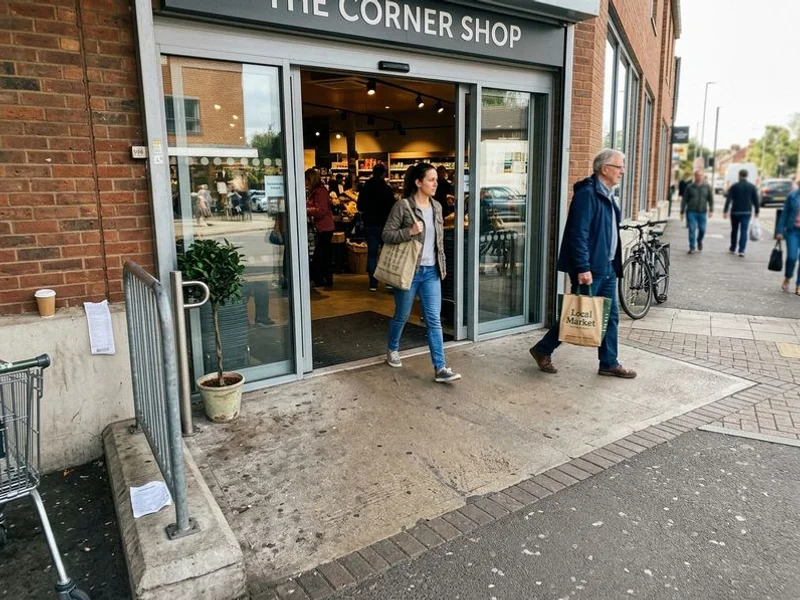
Commercial Concrete Leveling: the same slab, lifted back to grade
Commercial Repair vs Replacement: Downtime as the Real Cost
| Factor | Demolish & Repour | Polyurethane Lifting |
|---|---|---|
| Area closed | Days, sometimes a week | Hours, often after close |
| Scheduling | Contractor's hours | Your trading hours |
| Time to load-bearing | Days of cure | 15-30 minutes |
| Phasing across a large area | Difficult once demolition starts | Standard practice |
| Budget line | Usually capital | Usually maintenance |
| Debris and site impact | Dumpsters and haulage | None |
Get a Ballpark Before Anyone Comes Out
No email required to see a number. They run on the same inputs we measure on site, so you can budget against the range before booking the free inspection.
Commercial Concrete Leveling: Questions We Get Asked
Can you work outside our trading hours?
Yes, as standard. Commercial slab work is scheduled around tenant and trading hours including evenings and weekends. Work areas are sectioned so the rest of the site keeps operating, and because the foam reaches load-bearing strength in 15 to 30 minutes an entrance or loading area usually reopens the same shift.
Do we have to close the whole facility?
No. Sectional work is the normal approach. We scope which bays or areas need clearing, phase the job around them, and the rest of the floor or frontage keeps running. On a large area, phasing means no single closure is disruptive.
Will the repaired floor take forklift loads?
Yes. High-density polyurethane reaches load-bearing strength within 15 to 30 minutes and the material is specified for the loads actually present: forklift traffic, pallet jacks and racking point loads. A slab-on-grade warehouse floor carries all of that directly, so we ask what runs over it before we quote.
What offset height creates a compliance problem on an accessible route?
The ADA accessible route standard allows a quarter inch of vertical change, with a bevel required between a quarter and half an inch. Anything beyond that needs remediation. The practical point for a property manager is premises liability: a documented hazard left uncorrected is a materially worse position than one that has been dealt with, and lifting corrects it same-day per area.
Is grinding acceptable remediation instead?
For a minor offset it can be, but it removes the lip without addressing the void causing the movement, so the offset returns. Where a hazard sits on an accessible route and the slab is still settling, that matters more than it does on a private path.
How fast can a flagged hazard be corrected?
Lifting is typically same-day per area. Once the site assessment is done and the scheduling window is agreed, the physical work on a single entrance or walkway section is usually a matter of hours.
Do you carry insurance for commercial sites?
Yes. General liability insurance and Connecticut Home Improvement Contractor registration, documented before we start. If your facilities process needs certificates on file in advance, ask at the site assessment and we'll provide them.
Can you work around racking without emptying the warehouse?
Sectional work is normal. We scope which bays need clearing to give safe working access and phase the job so the rest of the floor keeps operating. Racking that genuinely has to be moved gets identified at the assessment rather than on the day.
How do I justify this to finance?
Two arguments usually do it. Lifting typically lands as a maintenance line rather than capital, and the downtime cost avoided is generally the larger number. A closed entrance or blocked loading bay costs a trading business more per day than most people put in the calculation.
When is replacing a commercial slab the right call?
When the concrete itself has failed: spalling, delamination, or fracturing beyond the point where sections can be lifted as units. That's a genuine minority of the commercial slabs we look at. Most are sound concrete over ground that gave way, which is what lifting is for.
Still have a question?
The on-site inspection answers it properly. We look at your actual slab and put the answer in writing, and it's free either way.
Related Services
Void Filling
Filling the washed-out cavity beneath a slab and stabilizing weak subgrade so settlement stops recurring.
Sidewalks & Walkways
Leveling uneven private walkways, stepped joints and trip hazards on paths, entries and shared access routes.
Joint Sealing
Sealing control joints and cracks so surface water stops washing out the base beneath the slab.
Ready to Book Commercial Concrete Leveling?
Free on-site inspection and written quote across Hartford County. If your slab isn't a lifting candidate, we'll tell you that instead of selling you one.
- No demolition, landscaping intact
- Same-day use on most jobs
- CT registered & insured