
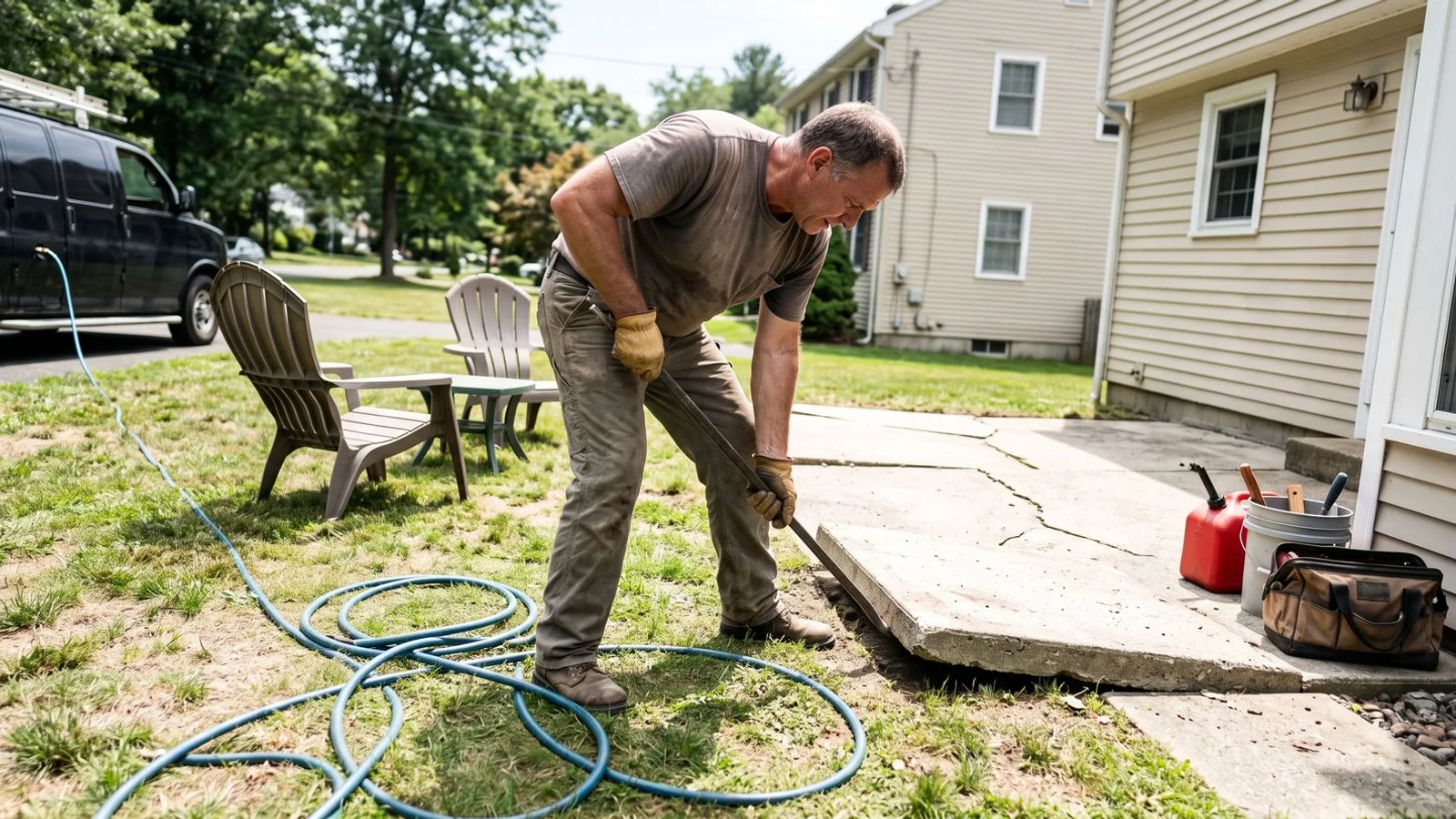
Settled Patios and Pool Decks Brought Back to Level
Lifting settled patio slabs, tilted porches and pool surrounds that have dropped or pitched.
- CT registered & insured
- Free written quote
- Same-Day Use on Most Jobs
-
CT HIC Registered
CT Dept. of Consumer Protection
-
Fully Insured
General liability cover
-
Same-Day Use on Most Jobs
Foam cures in 15-30 min
-
Free Written Quote
On-site inspection, no charge
What Is Patio and Pool Deck Leveling?
We often ask homeowners: are you tired of feeling your patio chairs wobble every time you sit down outside?
That uneven concrete is a frustrating but familiar sight all across Hartford County. A patio poured over backfill lacks a deep footing, leaving it completely exposed to the elements.
Our teams see the aftermath of this problem constantly, especially right after a harsh local winter. Recent 2026 climate data shows the Hartford area experiences up to 100 freeze-thaw cycles every single year. These drastic temperature swings cause the ground to shift, which tilts heavy slabs instead of dropping them evenly.
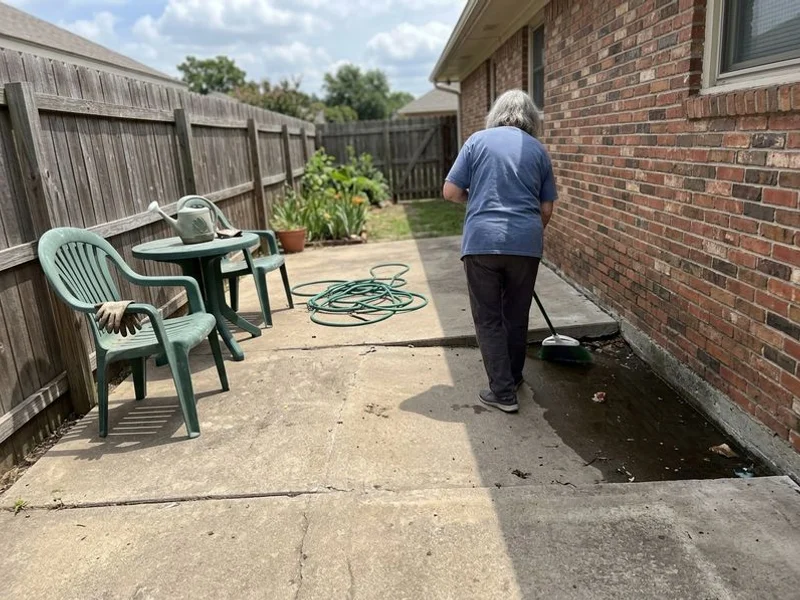
We provide expert Patio, Porch & Pool Deck Leveling to bring your outdoor flatwork back to grade. Water runoff often pools back against your house, creating a major risk for your basement. Correcting the angle sends that rainwater safely away from your home foundation.
Our lifting process is especially critical for stamped surfaces because matching an original weathered finish is practically impossible. If a drainage problem is what originally brought you here, the void filling and stabilization side of the job is the part that stops it from coming back. Grab a cup of coffee, and let’s go through exactly how this works together.
Why Outdoor Slabs Move More Than People Expect
We often explain to customers that a standard patio faces a tough battle against the weather. A poured slab simply does not have the same structural support as a full home foundation. Three specific factors cause outdoor concrete to settle much faster than expected:
- Lack of a deep footing: The Connecticut State Building Code requires footings to reach a 42-inch frost line depth, but patios sit right on the surface.
- Concentrated roof runoff: Rainwater often dumps from a roof valley without a gutter extension directly onto the slab edge.
- Poorly compacted soil: The dirt backfilled around a pool shell is notoriously loose compared to undisturbed ground.
Our inspections reveal how easily these issues combine to make even a brand-new patio start shifting. Water just needs to find a tiny path underneath the concrete to wash away the loose soil base. Industry data from 2025 shows that unchecked foundation water damage averages around $5,000 to repair.
We highly recommend addressing this movement early to protect your property and your wallet. A fast fix stops the damage before it spreads beneath your home. It is always cheaper to lift a slab than to repair a cracked foundation wall.
Settled Patio and Pool Deck Problems We Fix
Our crew tackles a wide variety of settling issues across the local suburbs. Finding a puddle standing against your foundation wall is usually the first major warning sign. Taking fast action prevents minor sinking from becoming a serious safety hazard.
The Patio Tilts Toward the House
We always warn homeowners about the hidden dangers of a patio sloping the wrong way. A few degrees of lost pitch is enough to reverse the drainage completely into your basement. Every single rainstorm accelerates the underlying soil washout once that water changes direction.
Our lifting process restores the correct outward slope to keep your foundation completely dry. Proper drainage is the best defense against expensive water damage. You will notice the difference during the very next heavy rainstorm.
The Pool Surround Has Dropped Beside the Coping
We pay special attention to the concrete sections immediately surrounding a swimming pool. Deck drains naturally carry water straight into the loosely compacted backfill hugging the pool shell. The slabs closest to the coping typically sink first and create a dangerous vertical step.
Our team strictly monitors these areas because wet concrete is already slippery enough without a tripping hazard. The International Swimming Pool and Spa Code limits vertical elevation changes to just 1/4 inch to prevent accidents. Fixing that sharp drop beside the coping is a crucial safety upgrade for your family.
A Stamped Patio Has Settled and the Pattern Can’t Be Matched
We know how frustrating it is when a beautiful stamped surface starts to sink. Ripping it out and pouring fresh cement will never perfectly match your original weathered color. Tearing out decorative concrete is also incredibly expensive in today’s housing market.
Our clients are often shocked to learn that installing new stamped concrete costs between $12 and $25 per square foot as of 2025. The conversation quickly shifts from full replacement to figuring out how to lift the slab invisibly. Saving your existing decorative flatwork is the most cost-effective choice by far.
The Porch Has Pulled Away From the House
We frequently repair front porches that have slowly drifted away from the main structure. A heavy concrete stoop sits on loose backfill while your house rests securely on deep footings. The porch moves independently during a freeze-thaw cycle and eventually pulls away from the siding.
Our technicians fill that structural gap to stop rainwater from pouring directly against the foundation wall. Closing that seam protects your basement from sudden leaks. It also immediately improves the curb appeal of your front entryway.
How We Level a Pool Deck Around the Shell
We handle pool deck projects with an entirely different level of precision and care. The delicate plumbing hiding beneath the surface requires a highly detailed approach before any drilling begins. A rushed job could easily crush a skimmer line or damage the expensive pool shell.
Our prep work involves locating every return line, deck drain, and the exact edge of the shell backfill. The injection port pattern is mapped safely around those hidden obstacles instead of blindly drilling through them. The actual lifting process follows a very specific sequence to ensure maximum safety:
- Mapping: Identifying all underground pool lines and shell edges.
- Drilling: Creating tiny injection ports in strategic, safe locations.
- Lifting: Pumping in the material in small, carefully monitored increments.
- Checking: Inspecting the coping and tile line constantly as the slab rises.
We lift the concrete at a much slower rate than a standard driveway section on purpose. Pumping pressure is watched the whole way so the pool structure remains completely undisturbed. Modern polyurethane foam is perfect for this task because it only weighs about four pounds per cubic foot.
Our lightweight foam is vastly safer than pumping heavy mudjacking slurry next to a fragile pool wall. You also do not need to drain the pool water during this repair. The work focuses strictly on the deck slab so you can get back to swimming faster.
Protecting Stamped and Decorative Concrete
We consider injection port placement to be the most critical part of treating decorative concrete. Traditional mudjacking relies on massive two-inch holes that permanently scar a stamped surface. Modern polyurethane lifting requires much smaller access points to get the job done.
Our team uses a standard polyurethane injection hole that is only 5/8 of an inch wide.
That is roughly the size of a dime, making it extremely easy to hide. Placing these holes where the eye already expects a visual break hides the repair beautifully.
We carefully drill these tiny ports straight into grout lines or existing pattern joints. The injection sites are then patched and expertly color-matched to the surrounding texture. Applying a fresh coat of sealer over the treated area afterward blends the final finish perfectly.
Our crew always asks homeowners to describe any existing sealers or stains during the free inspection. The exact patching strategy is finalized before a single drill bit touches your patio. This careful planning ensures your decorative concrete looks as good as new.
Patio Leveling vs Replacement: When to Repour
We promise to give you an honest answer about whether your slab can actually be saved. Lifting only works on outdoor concrete that is still structurally sound and intact. A patio that is crumbling, delaminating across the surface, or shattered into tiny fragments has reached the end of its service life.
Our experts know that no amount of foam will magically glue a destroyed slab back together. Ripping out a patio and pouring fresh cement involves a messy demolition and a lengthy 28-day curing process. A successful foam lift reaches 90 percent compression strength in just 15 minutes.
| Feature | Polyurethane Leveling | Full Concrete Replacement |
|---|---|---|
| Average Cost | Highly affordable | $12 - $25 per sq. ft. |
| Curing Time | 15 minutes | 28 days |
| Property Disruption | Minimal | Heavy demolition |
| Visual Impact | 5/8-inch holes | Complete surface change |
We would much rather tell you the slab is completely ruined than take your money for a lift that will fail. You deserve a permanent solution for your home exterior. You will get our complete, honest assessment in writing at the conclusion of your free inspection.
How Much Does Patio & Pool Deck Leveling Cost?
Outdoor flatwork is quoted on the same three measurements as everything else. What changes on patios and pool decks is the care the surface needs. Decorative finishes, coping and plumbing lines all show up in the scope rather than in a surcharge.
Single Patio Section
One dropped or tilted section brought back to grade.
Smallest scope
- Targeted lift on the settled area only
- Furniture and planting worked around
- Back in use the same day
Full Patio Re-Pitch
The whole slab leveled and the fall reset away from the house.
Most common
- Pitch corrected so runoff leaves the foundation
- Void filled beneath the full lifted area
- Stamped and decorative surfaces preserved
- Ports patched and color-matched where needed
Pool Surround
Controlled incremental lifting alongside a pool shell and coping.
Specialist scope
- Plumbing lines identified before the port pattern is planned
- Small monitored increments rather than a single push
- Coping and tile checked at each stage
- No need to drain the pool
What Moves the Number on Your Quote
- Square footage of the settled area
- Lift height, and whether the pitch has to be reset as well
- Void volume beneath the slab
- Decorative or stamped finish requiring port placement in grout lines
- Proximity to a pool shell, coping, skimmer or plumbing runs
- Seasonal scheduling around pool use or closing
Custom per-project quote based on square footage, lift height and void volume.
The inspection and the quote are free, and the quote is the price.
Why Choose Us for Patio & Pool Deck Leveling?
A Berlin-based crew, a method built for Connecticut ground, and a written recommendation you can hold us to.
Your Finish Survives
Stamped and colored concrete can rarely be reproduced if it's torn out. Lifting keeps the original pattern and color, with ports hidden in grout lines and patched to match.
Pitch Corrected, Not Just Level
A tilted patio is a drainage problem before it's a cosmetic one. We reset the fall so roof and surface runoff leaves the foundation instead of collecting against it.
Safe Alongside a Pool
Lift rate and pressure are monitored throughout precisely because of the shell. Plumbing lines get identified at the inspection and the port pattern is planned around them.
Planting Stays Put
Demolition access is what wrecks a garden. There's no excavator here, so beds, borders and mature planting around a patio stay exactly where they are.
Worked Around Furniture
We move what has to move and work around the rest. Outdoor kitchens, pergola posts and fixed seating don't have to come out for a lift.
Seasonal Scheduling
Pool deck and patio work runs best in the shoulder seasons. We'll tell you the sensible window rather than squeezing you into the wrong one.
Our Patio & Pool Deck Leveling Process, Step by Step
Most residential jobs are a few hours on site from arrival to cleanup.
Free Inspection
We measure the fall, sound the slab, and locate coping, drains and plumbing runs before anything is planned.
Plan the Ports
On stamped or decorative surfaces the holes go into grout lines and pattern joints so they disappear into the design.
Lift in Increments
Small monitored steps rather than one push, especially alongside a pool shell, with the level checked throughout.
Patch and Match
Ports patched and color-matched on finished surfaces, furniture back, and the slab in use the same day.
Want a real number for your patio & pool deck leveling?
Free on-site inspection, free written quote, and an honest answer on lifting versus replacing.
Patio & Pool Deck Leveling: What the Job Looks Like
Click any image to enlarge.
Before and After a Lift
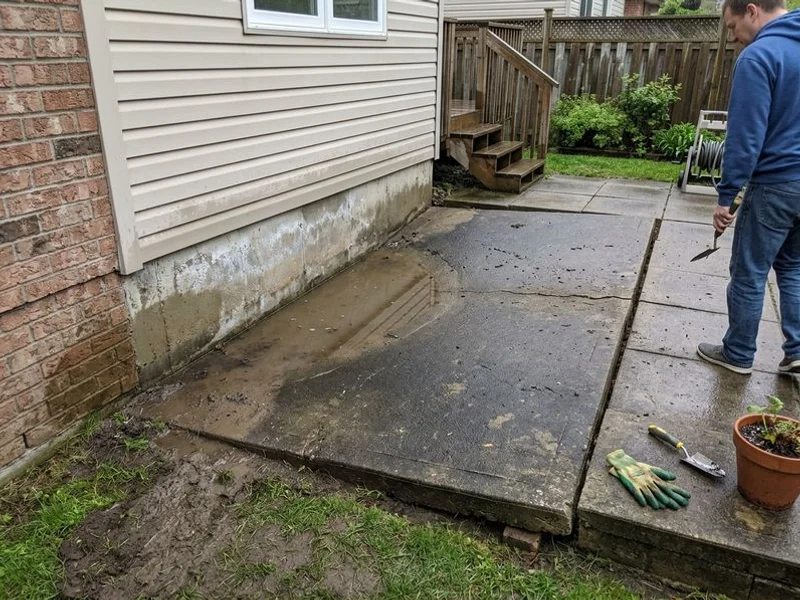
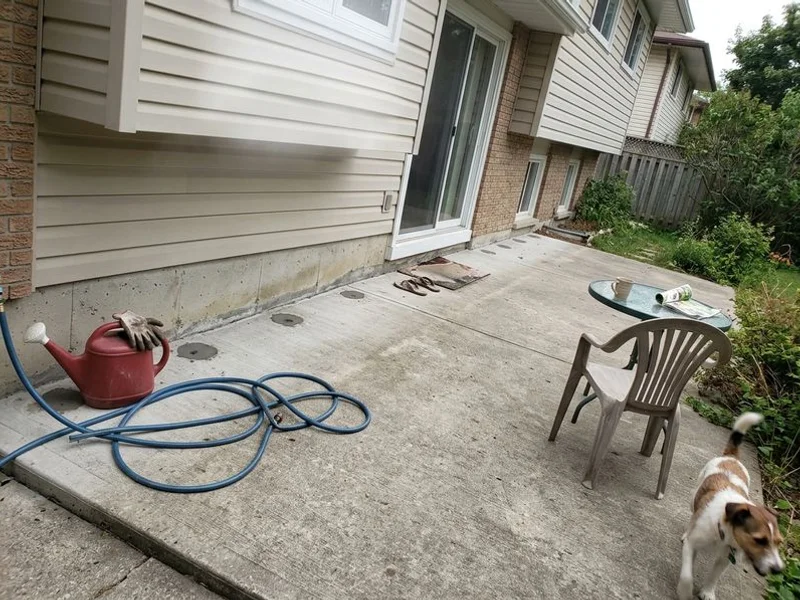
Patio & Pool Deck Leveling: the same slab, lifted back to grade
Lifting Outdoor Flatwork vs Replacing It
| Factor | Demolish & Repour | Polyurethane Lifting |
|---|---|---|
| Stamped or colored finish | Cannot realistically be matched | Original surface preserved |
| Garden and planting | Access damage around the slab | Untouched |
| Time out of use | A week or more | Same day |
| Work alongside a pool | Heavy equipment near the shell | Hoses and 5/8-inch ports |
| Drainage pitch | Reset by the new pour | Reset by the lift itself |
| Cost | Full replacement pricing | A fraction of tear-out |
Get a Ballpark Before Anyone Comes Out
No email required to see a number. They run on the same inputs we measure on site, so you can budget against the range before booking the free inspection.
Patio & Pool Deck Leveling: Questions We Get Asked
Can stamped or decorative concrete be lifted?
Yes, and it's the strongest case for lifting there is. Ports go into grout lines and pattern joints where they disappear into the design, then get patched and color-matched. If a stamped patio is torn out instead, matching the original stamp pattern and color on a repour is difficult and often impossible. That usually settles the decision on its own.
Is it safe to inject foam next to my pool shell?
Yes, with controlled incremental injection. The lift goes in small monitored steps rather than one push, and lift rate and pressure are watched throughout precisely because of the shell. Plumbing lines, the skimmer and any under-deck runs are identified at the inspection so the port pattern is planned around them.
Does the pool need to be drained?
Normally no. The work is on the deck slab, not the pool structure, so the water level stays as it is. If anything about your specific setup changes that, we'll say so at the inspection rather than on the day.
My patio tips back toward the house. Can lifting fix the drainage?
Yes. Surface drainage correction by lifting is one of the most common reasons we're called to a patio. We set the target fall so runoff leaves the foundation, then fill the cavity underneath so the corrected pitch holds rather than settling back. It's a drainage fix that happens to also make the slab level.
Why do patios settle when the house doesn't?
Because they have no footing under them. Freeze-thaw on unfooted slabs is the whole mechanism: patios and porches are poured over foundation backfill and sit well above Connecticut's 42-inch frost line, so they take the full cycle every winter while the house sits on footings below it. Add roof runoff concentration at the patio edge and the base washes out.
Will the patched ports be visible?
On plain concrete they're visible on close inspection and easy to miss from standing height. On stamped or colored surfaces they go into grout lines and get color-matched, which makes them genuinely hard to find. Either way it's far less noticeable than a mismatched replacement pour next to your old flatwork.
What about my sealed or stained patio?
Sealed and stained surfaces are fine to lift. Resealing the treated area afterwards blends the finish. Tell us what's on the surface at the inspection so we can plan the patching approach before anything is drilled.
Do pavers have the same problem?
Pavers settle for the same reasons but they're reset rather than lifted. You take them up, re-establish the base and re-lay them. Poured slabs are the lifting candidates. If you have both on a property, we'll be clear about which is which.
When is the best time of year to book patio work?
The shoulder seasons work best for outdoor flatwork. Spring, before you want the space, or autumn once pool season is done. Booking a summer patio lift in July is how people lose the use of it in the weeks they actually wanted it.
Can you lift a porch that's pulled away from the house?
Yes. That's usually a stoop or porch settlement job, and lifting the unit back to level closes the separation gap in most cases. If the porch is a structural covered entry rather than a slab, we'll say so at the inspection and tell you what's actually needed.
Still have a question?
The on-site inspection answers it properly. We look at your actual slab and put the answer in writing, and it's free either way.
Related Services
Void Filling
Filling the washed-out cavity beneath a slab and stabilizing weak subgrade so settlement stops recurring.
Sidewalks & Walkways
Leveling uneven private walkways, stepped joints and trip hazards on paths, entries and shared access routes.
Joint Sealing
Sealing control joints and cracks so surface water stops washing out the base beneath the slab.
Ready to Book Patio & Pool Deck Leveling?
Free on-site inspection and written quote across Hartford County. If your slab isn't a lifting candidate, we'll tell you that instead of selling you one.
- No demolition, landscaping intact
- Same-day use on most jobs
- CT registered & insured