
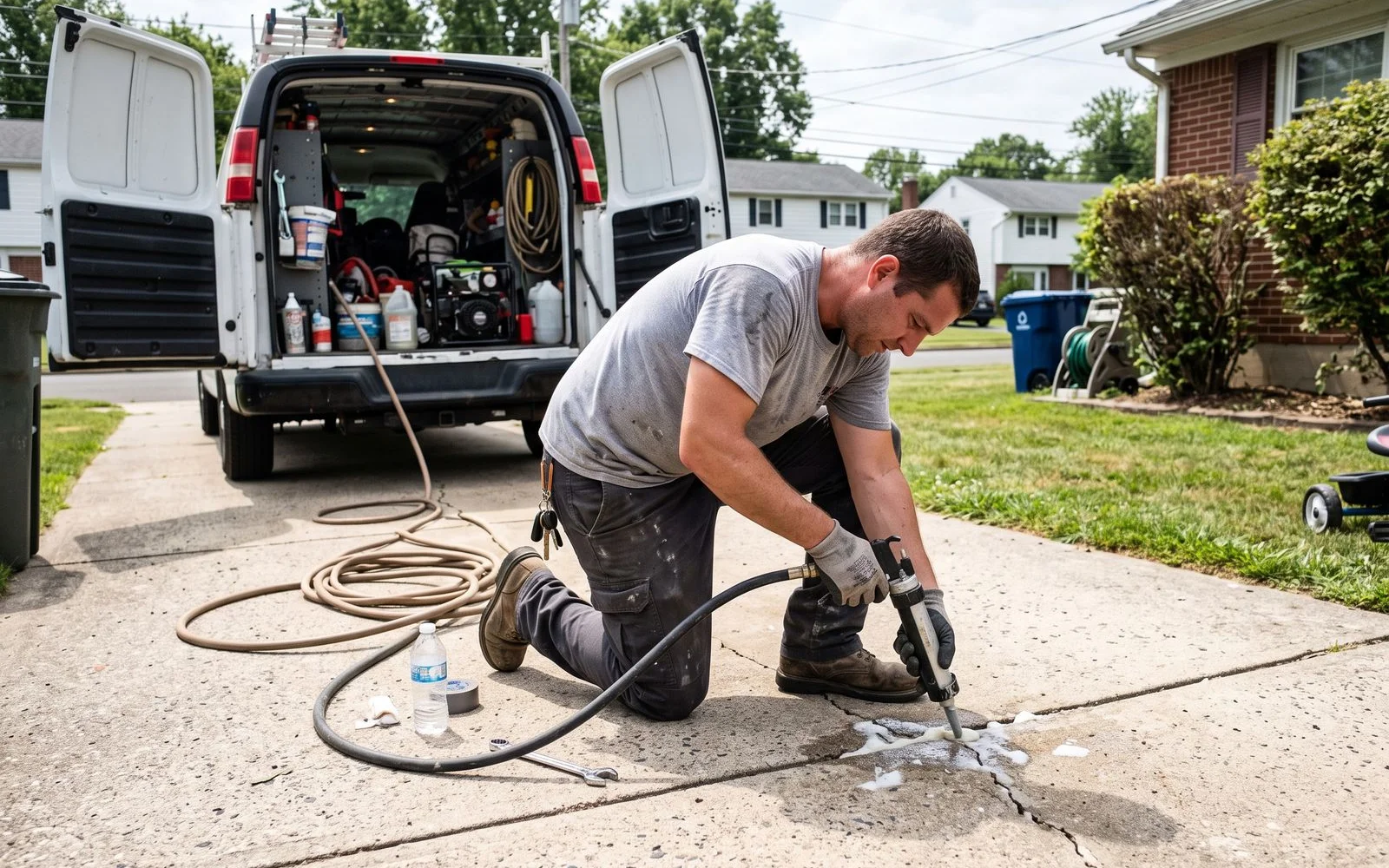
Concrete Leveling in Hartford County
Sunken Slabs Lifted Back Into Place
Not Torn Out
Driveways, garage floors, patios, walkways and front steps settle here because of what Connecticut winters do to the ground. Most of the time the fix isn't demolition. Free on-site inspection and written quote.
- 5/8-inch ports, no demolition
- Usable the same day
- CT registered & insured
- A fraction of tear-out cost
-
CT HIC Registered
CT Dept. of Consumer Protection
-
Fully Insured
General liability cover
-
Same-Day Use on Most Jobs
Foam cures in 15-30 min
-
Free Written Quote
On-site inspection, no charge
Four Signs Your Concrete Has Settled
Most people notice the symptom long before they know the fix has a name. Here is what usually brings homeowners across Hartford County to the phone.
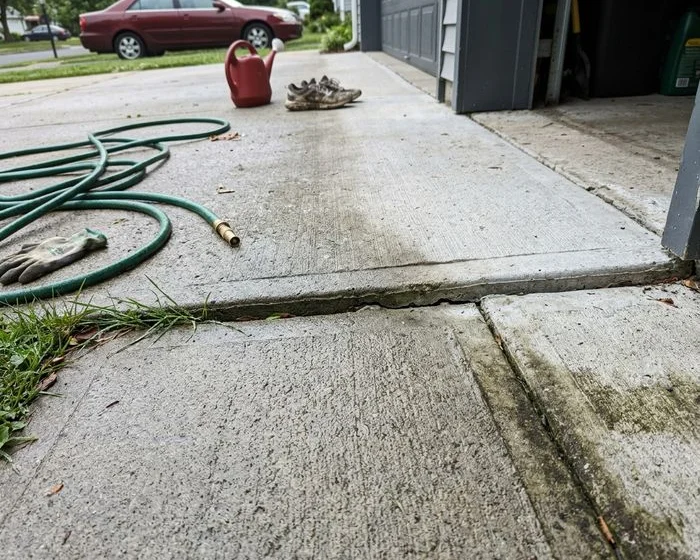
A Lip That Catches Toes
A stepped joint on a walkway or entry is a liability the day someone goes over it. And it grows every winter rather than settling down.
Water Running at the House
Once a slab tilts, roof and surface runoff heads for the foundation instead of away from it. A few degrees of lost pitch does that.
A Tear-Out Quote You Hate
Demolition, a week without the driveway, the landscaping wrecked, and a bill several times what a lift costs. Most of the time it is not necessary.
Doors and Thresholds Out of Line
A sunken garage or basement slab pulls thresholds, frames and doors out of alignment. The door is the symptom; the floor is the cause.
All four have the same cause underneath: a cavity where the supporting ground used to be. Poorly compacted backfill consolidates, water washes the fines out, and every freeze-thaw cycle opens the space a little further. Fix the void and the slab stops moving.
How voids form under a slabConcrete Lifting for Driveways, Garages, Patios and Steps
Nine services, one method. Whatever has dropped, the job is the same underneath: fill the void, lift the slab back to grade, keep the water out.
 Most Requested
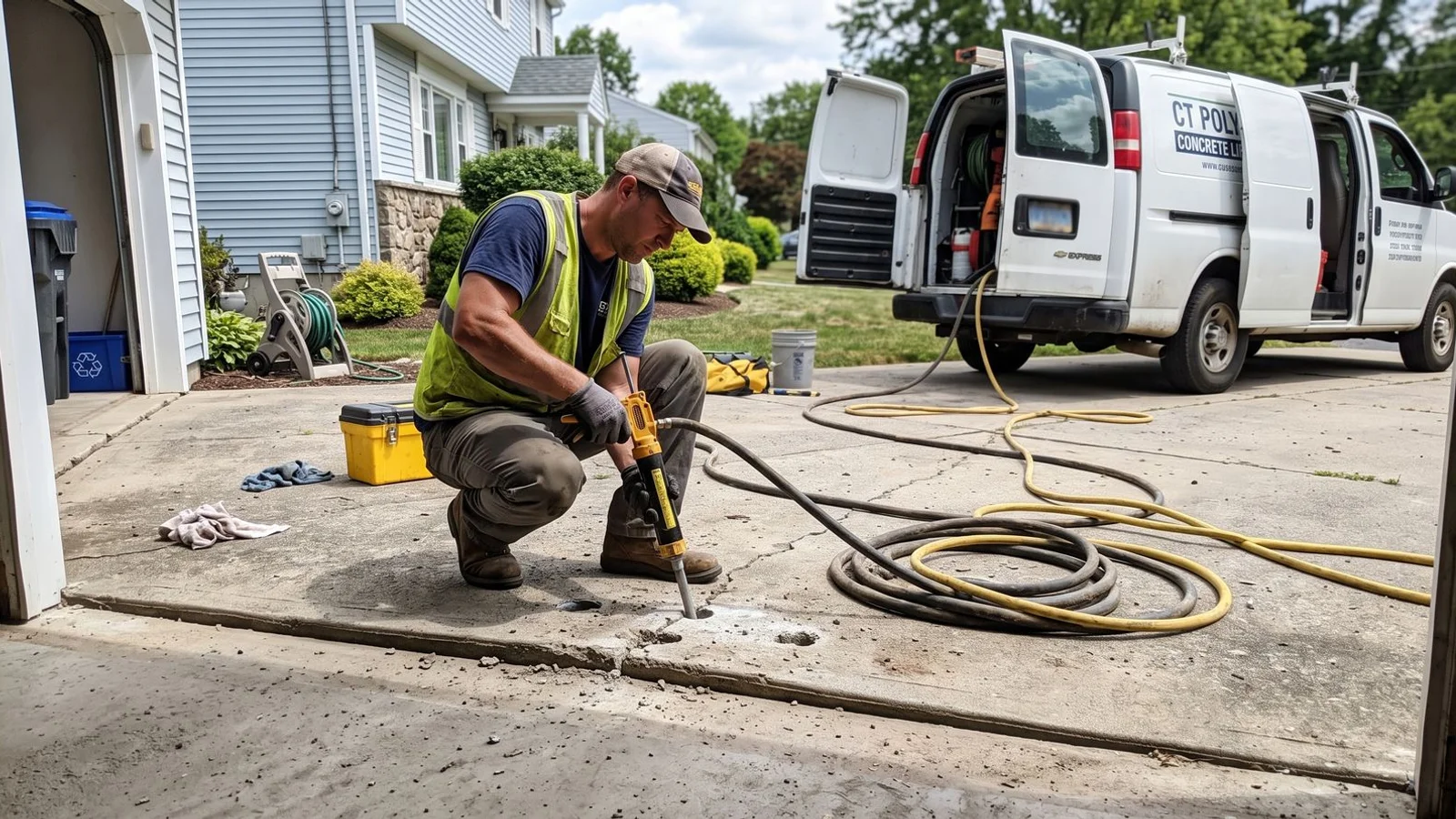
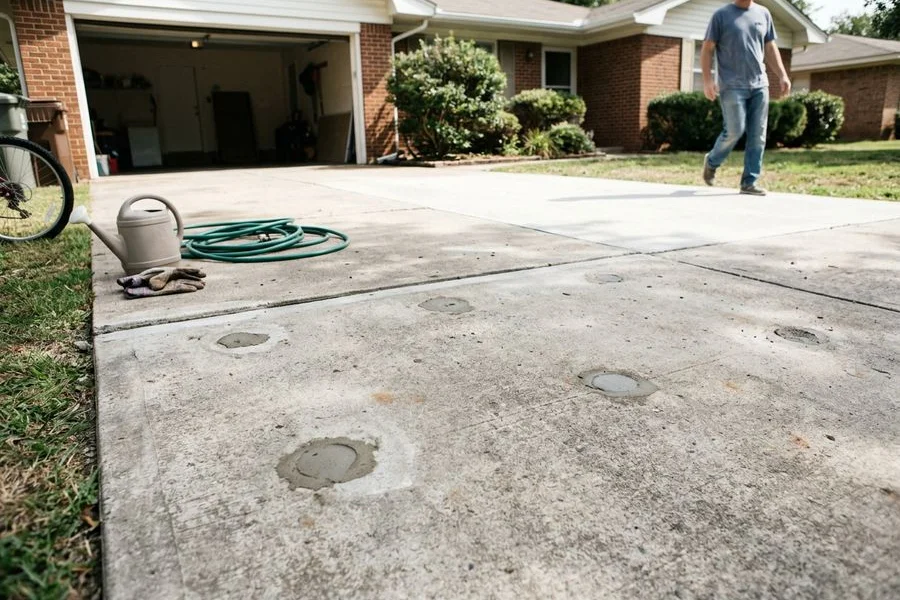
 Driveway Leveling
Lifting settled driveway slabs, dropped aprons and sections that have tipped back toward the house.
View Service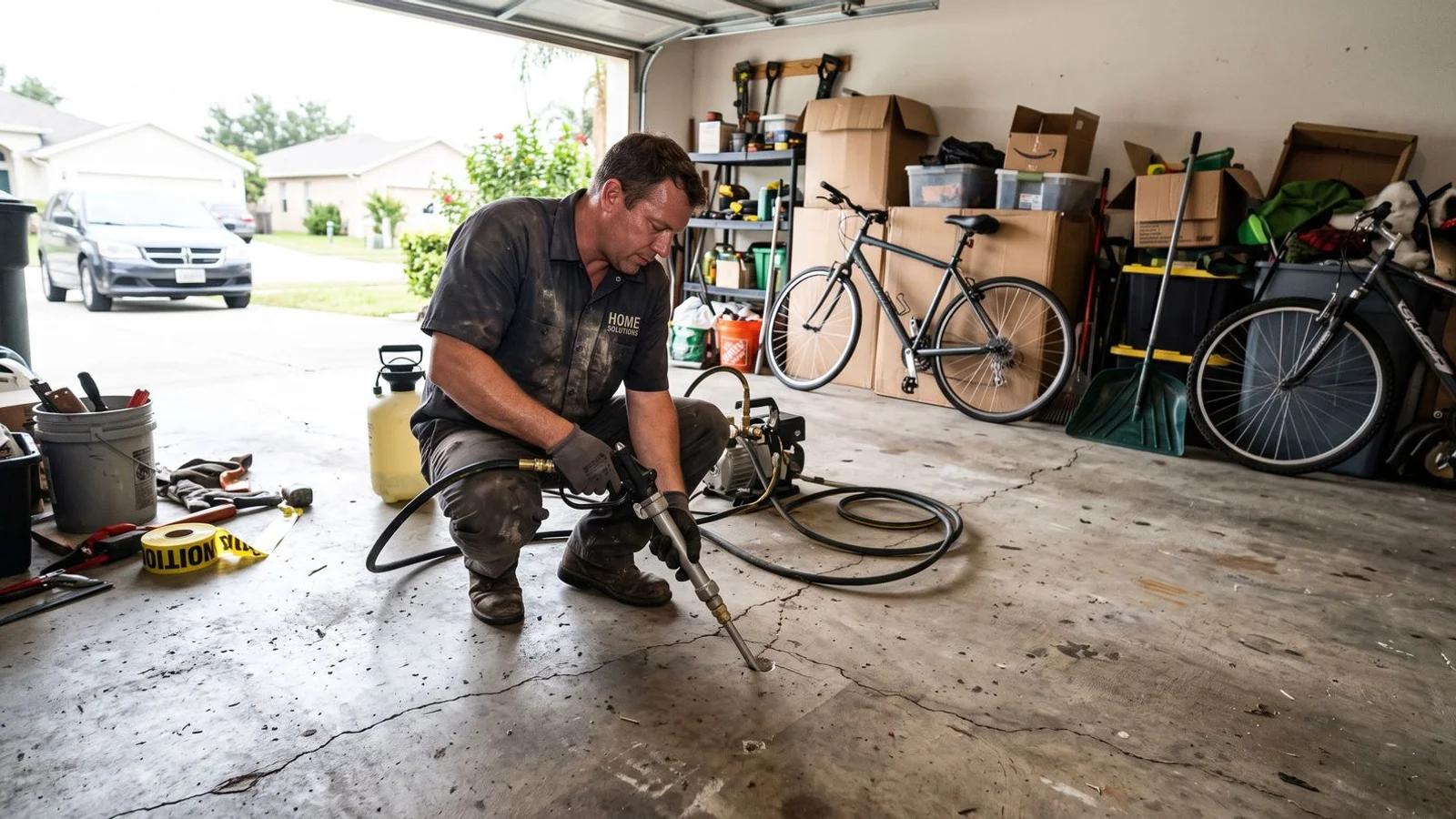
Garage Floors
Lifting sunken interior garage slabs, cracked and stepped sections, and floors that have thrown doors out of alignment.
View Service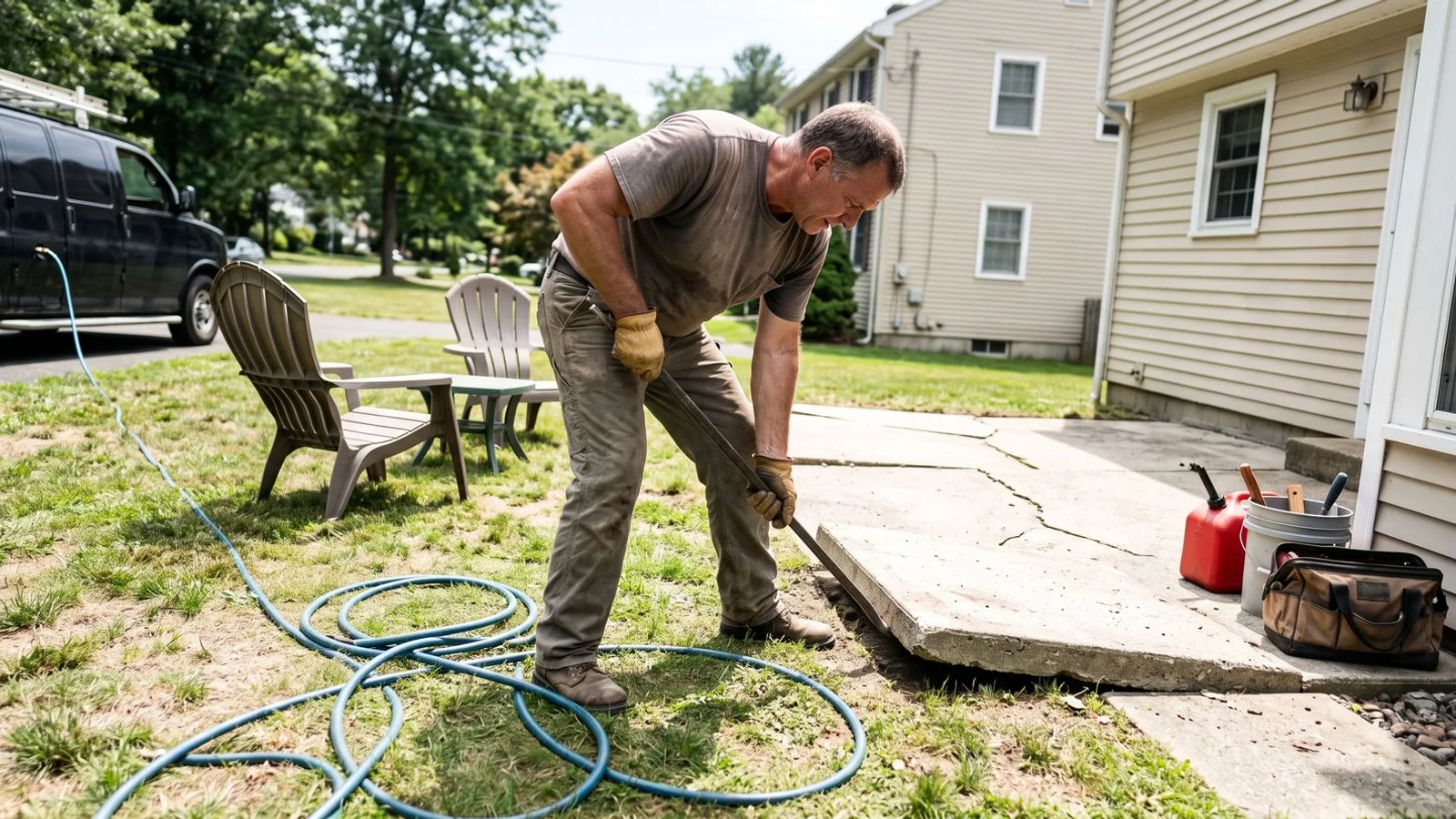
Patios & Pool Decks
Lifting settled patio slabs, tilted porches and pool surrounds that have dropped or pitched.
View Service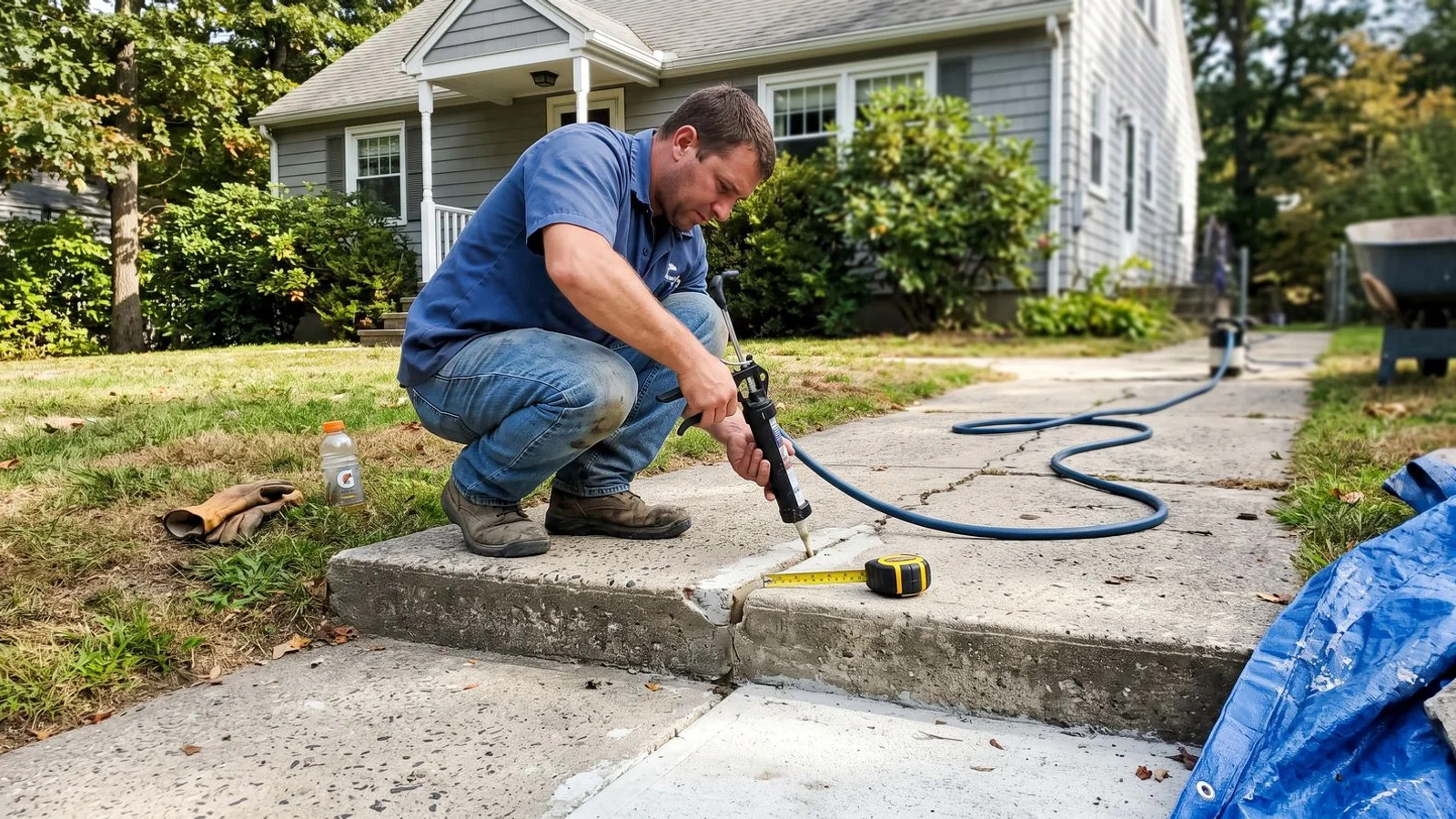
Sidewalks & Walkways
Leveling uneven private walkways, stepped joints and trip hazards on paths, entries and shared access routes.
View Service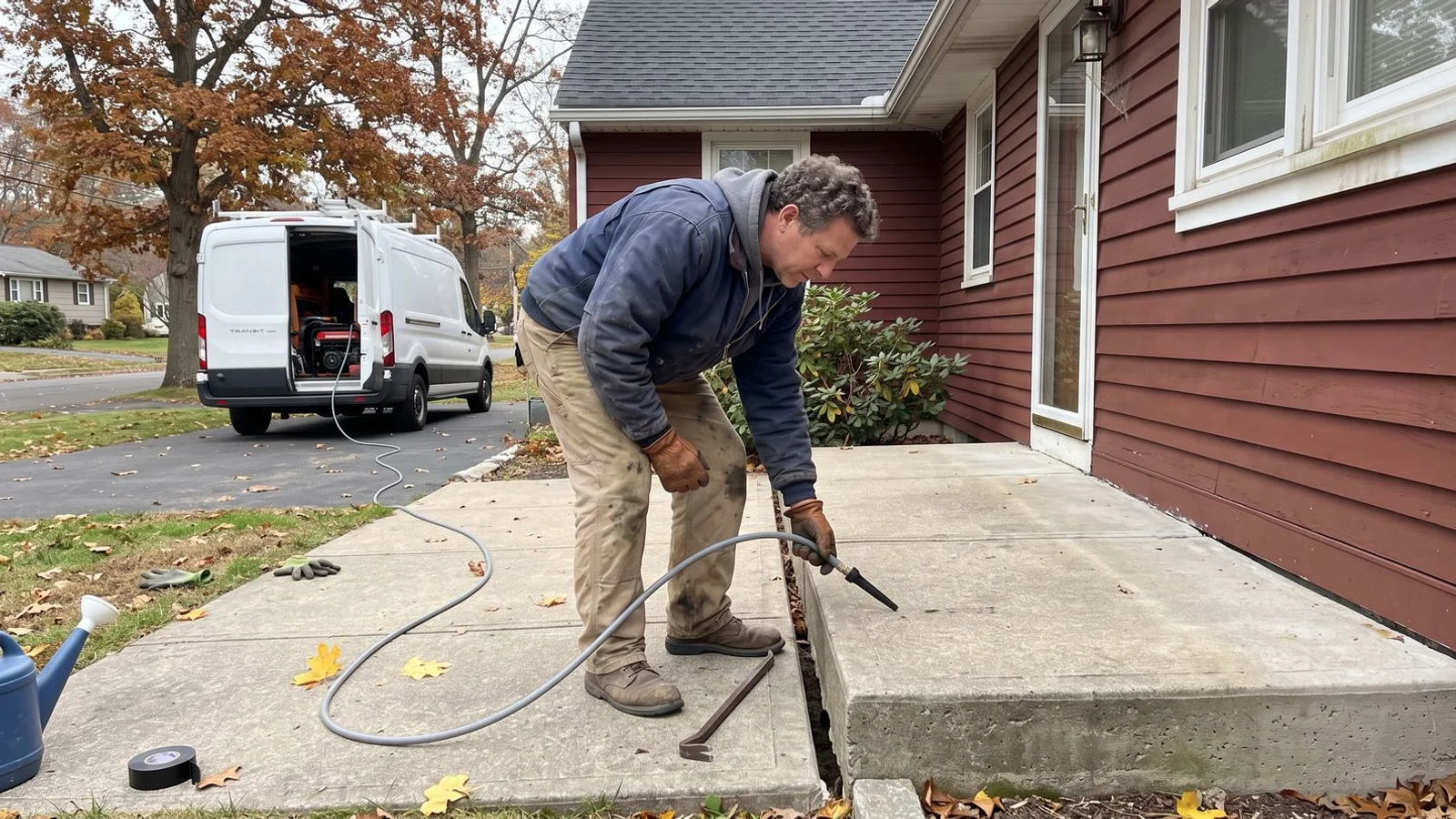
Steps & Stoops
Lifting front steps and stoops that have dropped at a corner or pulled away from the house.
View Service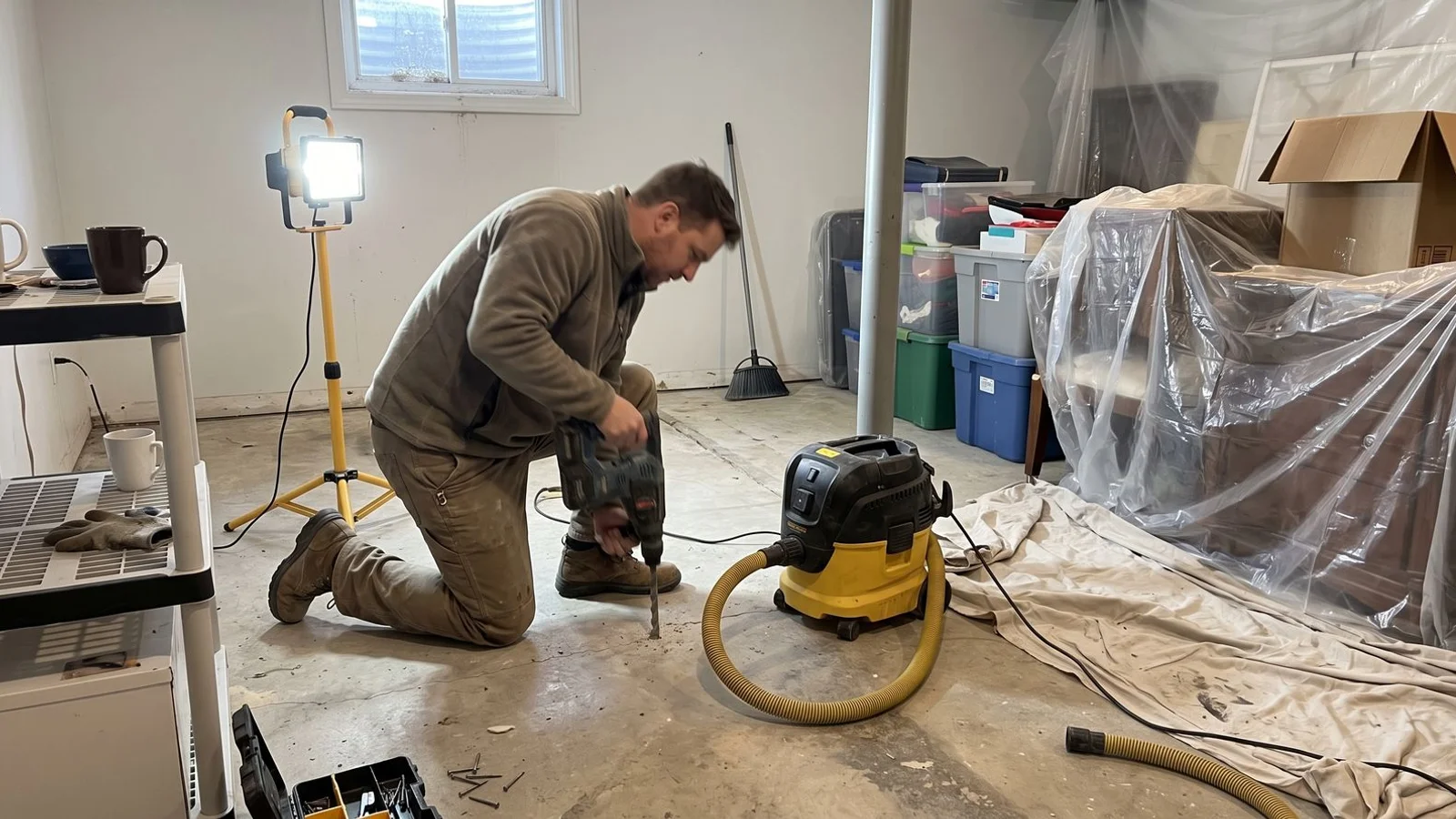
Basement & Interior Slabs
Lifting settled basement floors, utility room slabs and interior flatwork.
View Service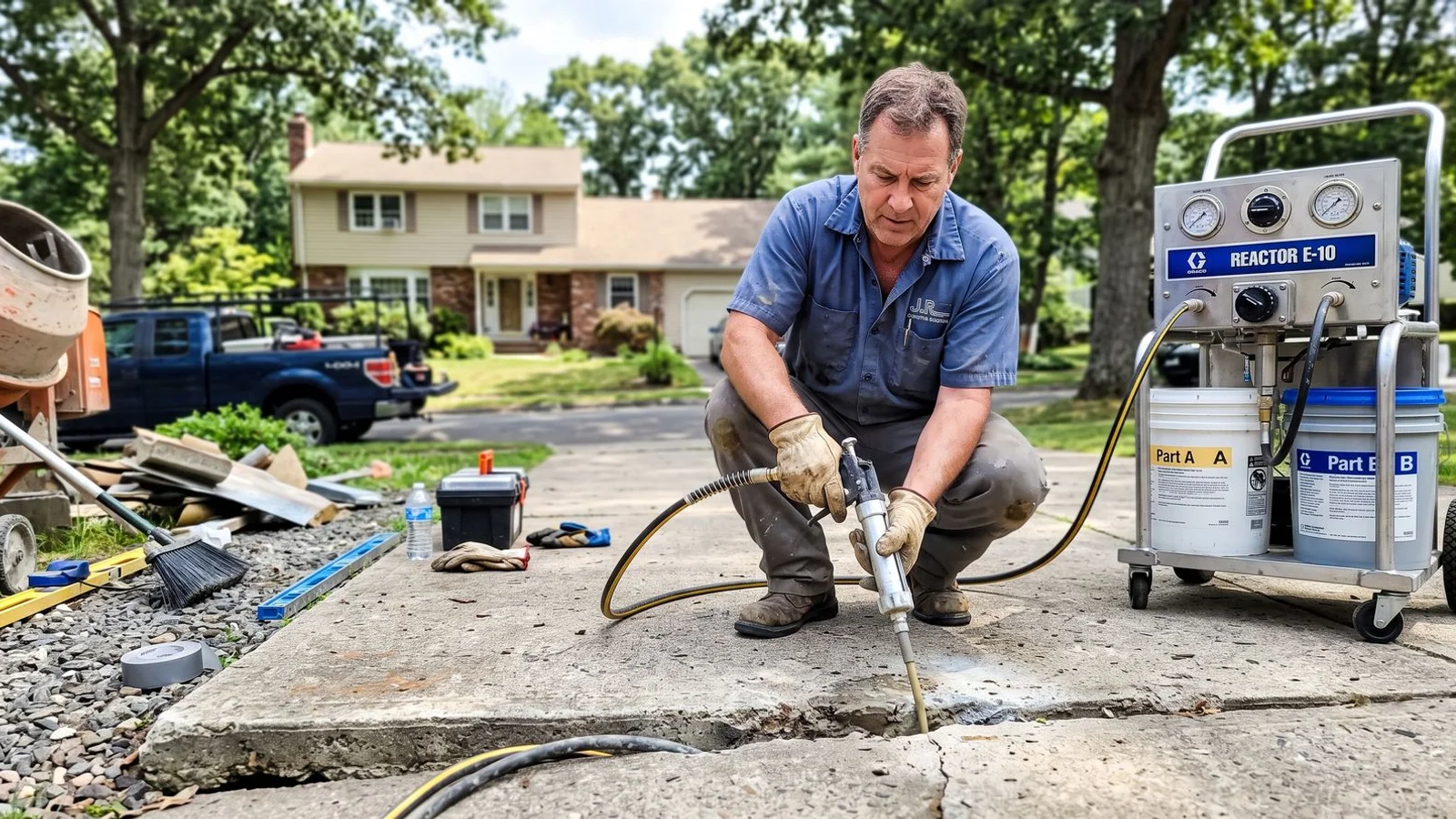
Void Filling
Filling the washed-out cavity beneath a slab and stabilizing weak subgrade so settlement stops recurring.
View Service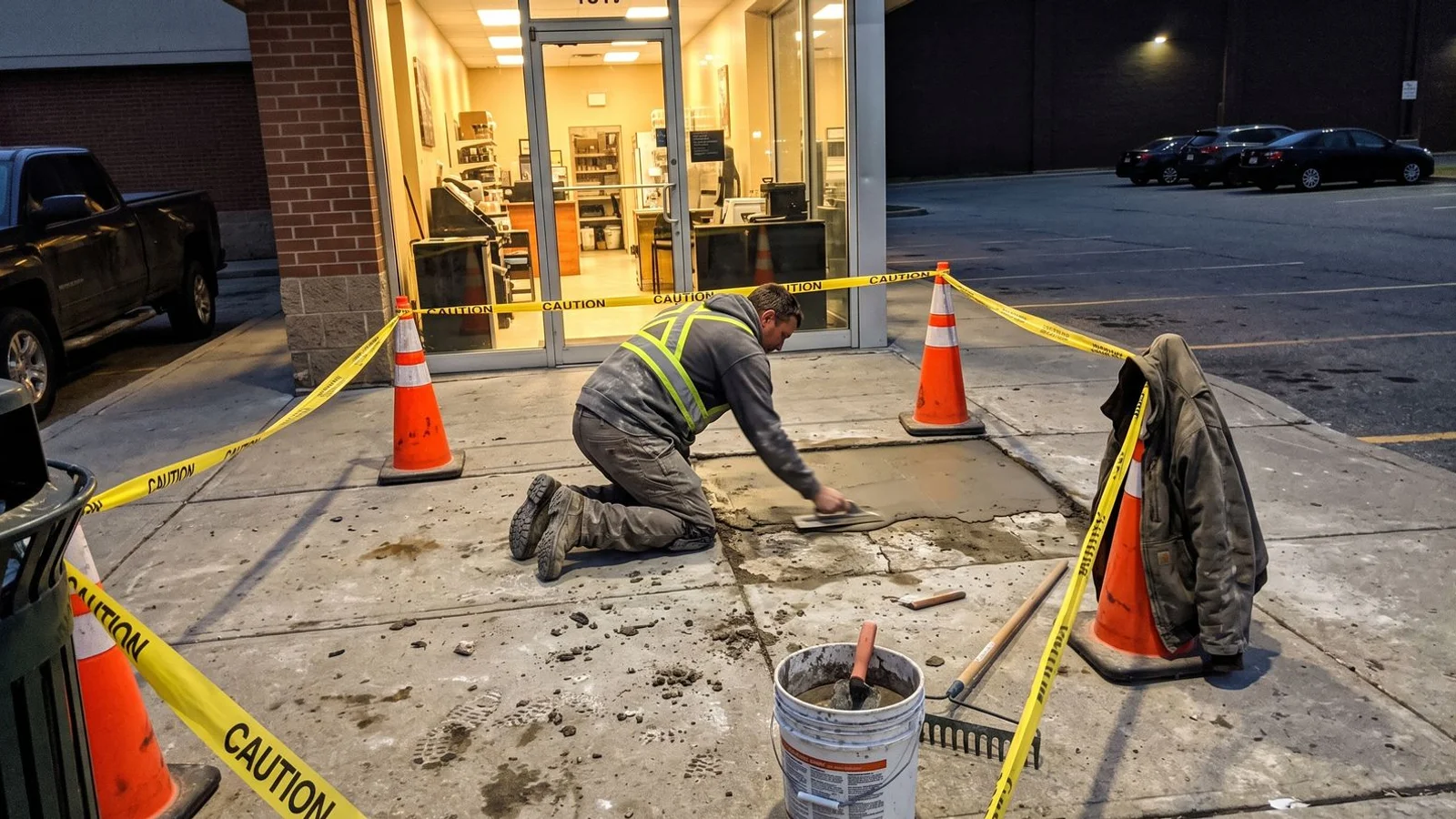
Commercial
Slab repair for retail, office and small industrial properties: entrances, walkways, loading areas and warehouse floors.
View Service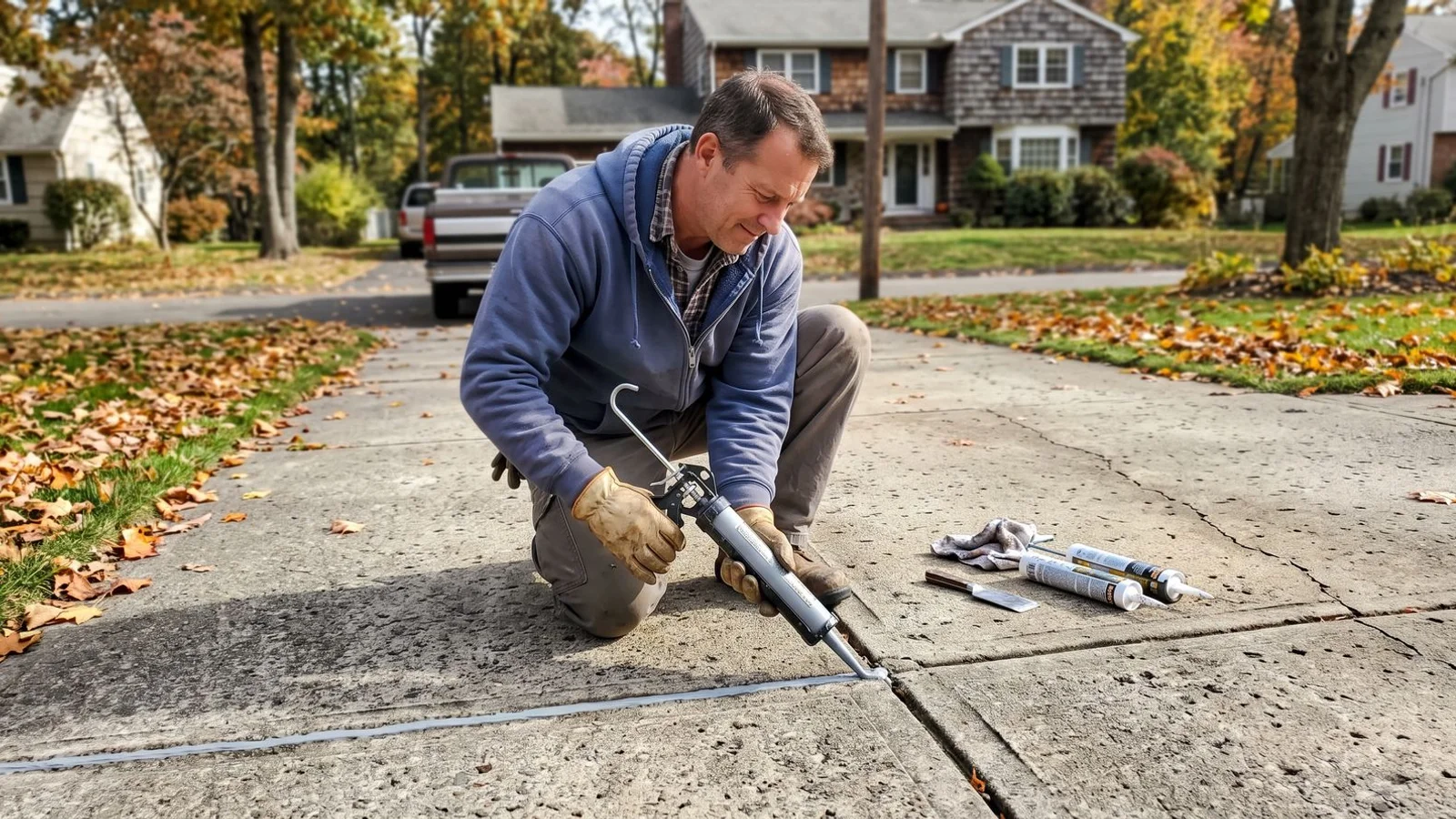
Joint Sealing
Sealing control joints and cracks so surface water stops washing out the base beneath the slab.
View Service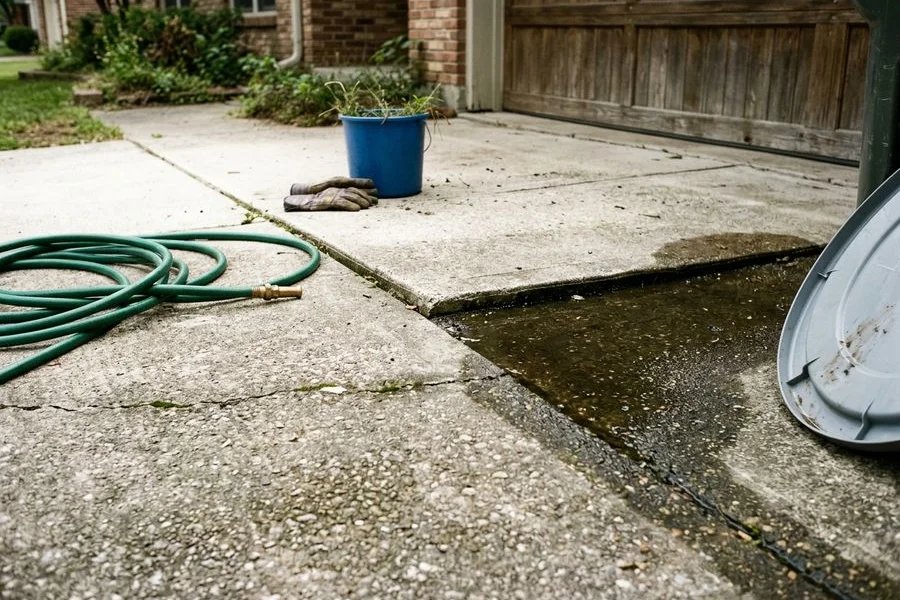
Why Homeowners Pick Lifting Over Replacement
The tear-out quote is the real competitor here, not another concrete company. Here is the honest case against it, and the one case for it.
Foam, Not Slurry
Polyurethane weighs 2-6 lbs per cubic foot against mudjacking slurry at roughly 120. We are not adding weight to ground that already failed. It goes in through 5/8-inch ports, cures in 15-30 minutes, and being hydrophobic it displaces water instead of washing out.
A Fraction of Tear-Out
Replacement is priced by area and paid for in demolition, disposal, forms, concrete and a week of no access. Lifting is priced on lift height and void volume. The bigger your slab, the wider that gap gets.
Built for Connecticut Ground
Our frost line sits at 42 inches and footings have to reach below it. Your driveway does not. That single fact explains why flatwork settles here every winter and why a surface-only fix will not hold.
Nothing Gets Torn Up
No excavator, no demolition, no material stockpiles across the lawn. Everything works from the slab surface. On a property you have spent years landscaping, that is usually the whole argument.
A Local Crew That Answers
We work out of Berlin and cover Hartford County. You get the owner on the phone and the owner at the inspection, not a national franchise routing your call to a contact center three states away.
We Say When to Replace
Spalling, crumbling or heavily fractured concrete has reached the end of its service life and a lift on it is wasted money. You get that answer in writing at the free inspection, because it is worth more to you than a sale.
How Polyurethane Slab Lifting Actually Works
It sounds experimental until you see it. Four steps, a few hours on site, and the slab takes a load again before we pack up.
Free Inspection
We look at the slab, sound it for voids, measure the drop and tell you in writing what it needs, including when that is replacement.
Penny-Sized Ports
A planned pattern of 5/8-inch holes goes through the slab. Compare that to the 2-3 inch holes mudjacking needs.
Inject and Lift
Two-part expanding polyurethane fills the cavity first, then lifts the slab back to grade in monitored increments.
Patch and Go
Ports patched, site cleaned, foam at load-bearing strength in 15-30 minutes. Most driveways take a car before we leave.
Not sure whether to lift it or replace it?
That's the question the free inspection answers, in writing, before you spend anything.
No Reviews Yet. Here Is What We Can Prove Instead.
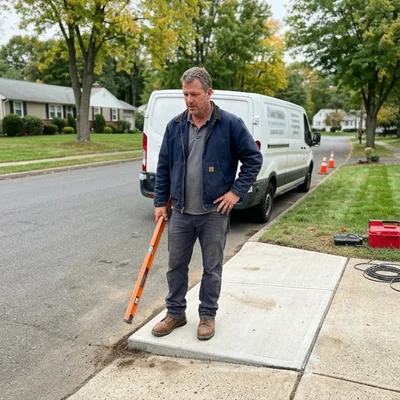
We're new, and we're not going to pretend otherwise with invented five-star quotes. What we can put in front of you today is registration, insurance, a named owner who does every inspection himself, and a written quote you can hold us to.
- CT Home Improvement Contractor registration (CT Department of Consumer Protection)
- General liability insurance
- Foam manufacturer certified installer
- Free on-site inspection and written quote
- Locally owned and operated from Berlin, CT
We're working toward our first ten Google reviews, and every job gets photographed before, during and after with the town recorded. When there are real reviews and real project galleries to show, they go on this page. Until then, this is the honest version.
Concrete Lifting vs Tear-Out and Repour
| Factor | Tear-Out & Replace | Polyurethane Lifting |
|---|---|---|
| Hole size in your slab | Full demolition | 5/8-inch ports, patched |
| Time before you can drive on it | 7+ days including cure | Same day, 15-30 min cure |
| Landscaping and edging | Access damage, often replaced | Untouched |
| Cost | Full replacement pricing | A fraction of tear-out |
| Fixes the void underneath | Only if the base is re-compacted | Yes, that is the job |
| Stamped or decorative finish | Cannot be reproduced | Preserved, ports color-matched |
| Debris and disposal | Dumpster on the property | None |
Slab Lifting in Five Measurements
No review history to quote yet, so here is the physics instead. Every figure below is a published material spec or a Connecticut code fact you can check for yourself.
- Connecticut frost line
- 42 in
- Footings have to reach below it. Your driveway sits well above it and takes the whole freeze-thaw cycle.
- Injection port
- 5/8 in
- About the width of a penny, patched on completion. Mudjacking needs 2 to 3 inch holes.
- Cure to load-bearing
- 15-30 min
- Mudjacking slurry typically needs 24 to 72 hours before it will carry a car.
- Foam per cubic foot
- 2-6 lbs
- Slurry runs around 120. We are not adding weight to ground that already gave way.
- Hartford County coverage
- 23 towns
- Every town we cover has its own page with the local ground and access notes.
What Does Concrete Lifting Cost in the Hartford Area?
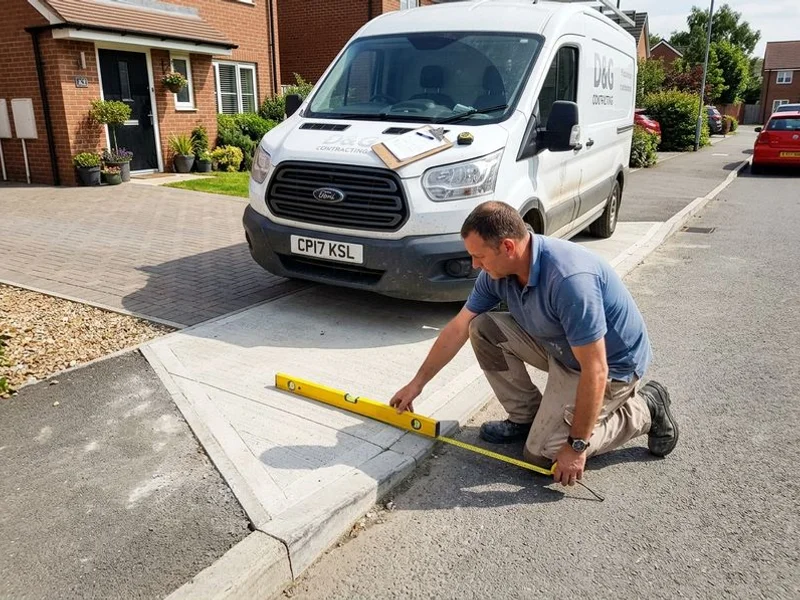
Every job is quoted per project on three things: square footage, how far the slab has dropped, and how much void has to be filled underneath. Flat per-slab rates hide too much variation to be honest. Two 400 square foot driveways can differ several times over in material once you measure the cavity.
What holds across every job is the comparison. Lifting runs at a fraction of tear-out and replacement, and that gap widens as the slab gets bigger. The on-site inspection and the written quote are free, and the quote is the price.
- Square footage of the area that has to be lifted
- Lift height: how far the slab has dropped from grade
- Void volume beneath the slab, sounded and measured on site
- Slab type and access, itemized rather than hidden
Get a Ballpark Before Anyone Comes Out
No email required to see a number. They run on the same inputs we measure on site, so you can budget against the range before booking the free inspection.
Serving Hartford County From Berlin, CT
We cover the county and the immediate Hartford metro. Every town below has its own page with the local ground conditions, housing stock and access notes that actually apply there.
Primary Service Areas
Also Serving
Concrete Lifting Questions Homeowners Ask
How does polyurethane concrete leveling work?
We drill penny-sized (5/8") ports through the settled slab, inject a two-part expanding polyurethane that fills the void beneath it, and lift the concrete back to grade in monitored increments. The foam reaches most of its strength in 15-30 minutes, then the ports are patched. There's no demolition and your landscaping stays where it is.
How much does concrete leveling cost in Connecticut?
Every job is quoted per project on square footage, lift height and how much void has to be filled. Flat per-slab rates hide too much variation to be honest. What holds across jobs is that lifting runs at a fraction of tear-out and replacement. The on-site inspection and written quote are free, and the quote is the price.
How soon can I drive or walk on the concrete again?
Same day on most residential jobs. The polyurethane reaches load-bearing strength within 15-30 minutes of injection, so a driveway or garage floor typically takes a vehicle before we leave the property. Mudjacking slurry, by comparison, needs 24-72 hours before it will carry a load.
Why does concrete sink so much in Connecticut?
Connecticut's frost line sits at 42 inches, and footings must reach below it. Driveways, patios and walkways sit well above that depth and take the full freeze-thaw cycle every winter. Combine that with the uncompacted backfill most flatwork was poured over and water washing fines out from underneath, and a void forms. The slab has nothing left to sit on, so it drops.
How is this different from mudjacking?
Mudjacking pumps a cement slurry weighing roughly 120 lbs per cubic foot onto ground that has already failed under the slab's own weight, through 2-3 inch holes. Polyurethane foam weighs 2-6 lbs per cubic foot, goes in through 5/8-inch ports, cures in minutes rather than days, and is hydrophobic so it doesn't wash out over time.
How do I know if my slab can be lifted or needs replacing?
Intact sections with clean cracks lift well. Slabs that are spalling, crumbling, or broken into many pieces have reached the end of their service life and are better replaced. We give you that answer at the free inspection in writing, including when replacement is the better buy, because a lift on a failing slab isn't worth your money.
Still have a question?
The on-site inspection answers it properly. We look at your actual slab and put the answer in writing, and it's free either way.

Ready to Find Out What Your Slab Actually Needs?
The on-site inspection and the written quote are free, and the quote is the price. If lifting isn't the right call for your concrete, we'll tell you that instead.
- No demolition, landscaping intact
- Same-day use on most jobs
- CT registered & insured