
Settled Basement and Interior Slabs Lifted With the House Occupied
Lifting settled basement floors, utility room slabs and interior flatwork.
- CT registered & insured
- Free written quote
- Same-Day Use on Most Jobs
-
CT HIC Registered
CT Dept. of Consumer Protection
-
Fully Insured
General liability cover
-
Same-Day Use on Most Jobs
Foam cures in 15-30 min
-
Free Written Quote
On-site inspection, no charge
What Is Interior Slab Lifting?
Have you noticed a sinking feeling in your basement lately? We get daily calls about basement & interior slab lifting right here at CT Pro Concrete Leveling.
Luckily, a dropping basement floor is usually just a slab issue, not a structural foundation disaster. We fix these exact issues in a matter of hours, saving you from a two-week demolition nightmare.
Over the years, the dirt underneath your floor simply compacts, causing the concrete to drop while your walls stay perfectly still.
Our team uses high-density polyurethane foam to gently lift that slab right back where it belongs. For a deeper look at how these empty spaces form, the void filling and stabilization guide explains the science behind the settling.
Slab Settlement Is Not Foundation Movement
Your home’s footings reach below Connecticut’s 42-inch frost line for a very important reason. We know those deep footings protect your house from seasonal freezing and thawing.
The basement floor is poured directly onto loose fill dirt inside those walls during construction. It has been quietly consolidating and shifting ever since the day your house was built.
Our polyurethane injection process addresses this specific separation between the floor and the foundation. Because the two pieces are independent, a floor can drop a few inches while every wall, frame, and window stays exactly where it was built.
We always look for this clear sign during an inspection. If the concrete has dropped but the walls look untouched, you are looking at a simple slab problem.
| Feature | Polyurethane Slab Lifting | Full Slab Replacement |
|---|---|---|
| Average 2026 Cost (CT) | $7 to $15 per sq. ft. | $10 to $18 per sq. ft. |
| Project Timeline | 2 to 4 hours | 1 to 2 weeks |
| Mess Factor | Minimal (Penny-sized holes) | High (Heavy demolition) |
Deeper structural trouble requires a completely different approach. We will tell you immediately if we spot stair-step cracking through block coursework, door frames noticeably out of plumb, or doors on the floor above starting to stick.
An honest assessment is the most valuable thing a contractor can offer. Our experts will direct you to a structural specialist if your home actually needs one.
Basement and Interior Slab Problems We Fix
A Dip Following an Old Plumbing Trench
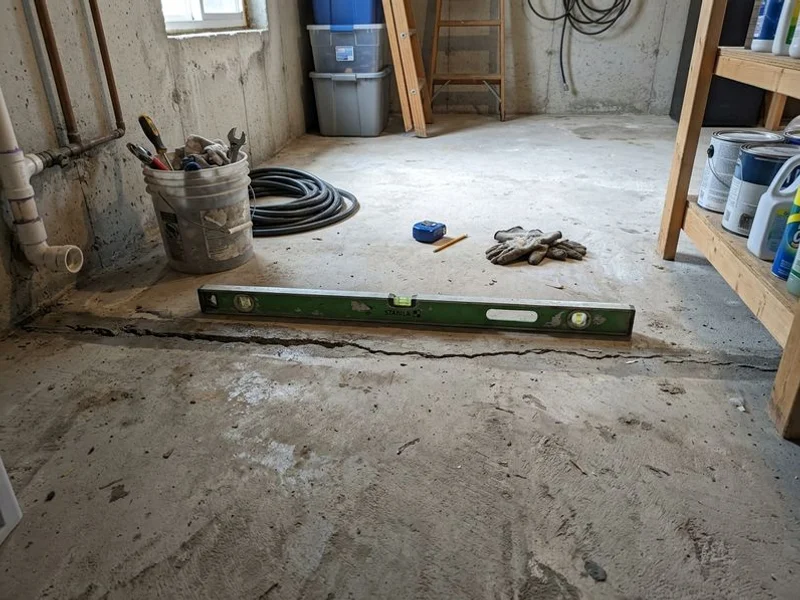
Older properties throughout Hartford County frequently show a very recognizable interior settlement pattern. We often see a distinct, linear dip running straight across the middle of a basement floor.
This happens because drainage pipes were placed into trenches during original construction, and the surrounding dirt was never properly packed down. Our team injects expanding polyurethane foam to compress this loose dirt and fill the empty void.
The liquid foam expands 15 to 20 times its original volume within seconds, pushing the sunken concrete strip back to level. A crack usually forms right along the edges of these old trenches, but lifting the slab prevents the gap from getting worse. We patch the small injection holes immediately, leaving your floor smooth and safe to walk on.
The Utility Room Floor Has Dropped Around the Drain
Water naturally flows toward floor drains, carrying tiny soil particles along with it. We frequently fix utility room floors that have settled unevenly around the central drain.
This creates a very awkward and potentially dangerous situation when a heavy water heater or furnace leans into the low spot. Our closed-cell polyurethane foam provides the perfect fix because it is completely waterproof.
The permanent benefits of this foam injection around drains include:
- Waterproof Protection: The cured foam permanently stops the soil from eroding further.
- Zero Equipment Moving: We stabilize the ground beneath your heavy appliances without needing to unplug or move them out of the basement.
- Immediate Support: The foam cures completely in 15 minutes, instantly securing the base of your mechanical equipment.
Doors and Framing Out of Alignment
An interior door that used to swing perfectly might suddenly start catching on the floor. We know many folks try adjusting the hinges or shaving the bottom of the door to hide the problem.
These temporary fixes completely ignore the empty cavity growing beneath the slab. Our foam injection system boasts an impressive lifting capacity of up to 4,800 pounds per square foot.
That immense strength easily raises the concrete back up, instantly bringing your interior framing and appliance feet back into perfect alignment. We tackle the root cause of the shift so you can stop wasting time sanding down doors.
Water Has Been Under There
Sometimes a sunken floor arrives with clear evidence of moisture, like a visible tide line or a musty smell after a heavy rainstorm. We also look for efflorescence, which is a white powdery stain left behind when groundwater evaporates through the concrete.
These signs usually point to high hydrostatic pressure pushing water against your foundation from the outside. Our primary question changes from how to lift the floor to whether active water is still washing soil away.
The lifting process will fail if a broken pipe or poor yard grading continues to funnel water underneath the house. We always help you verify that the underlying water issue is resolved before attempting a permanent lift.
How Interior Slab Lifting Works Indoors
The first and most important step of any indoor project is a proper diagnosis. We carefully measure your floor against fixed points and check the surrounding walls to confirm the movement is strictly a slab issue.
Getting this initial assessment wrong costs a homeowner a great deal of money in the wrong direction. Our team takes interior cleanliness very seriously once the concrete is cleared for lifting.
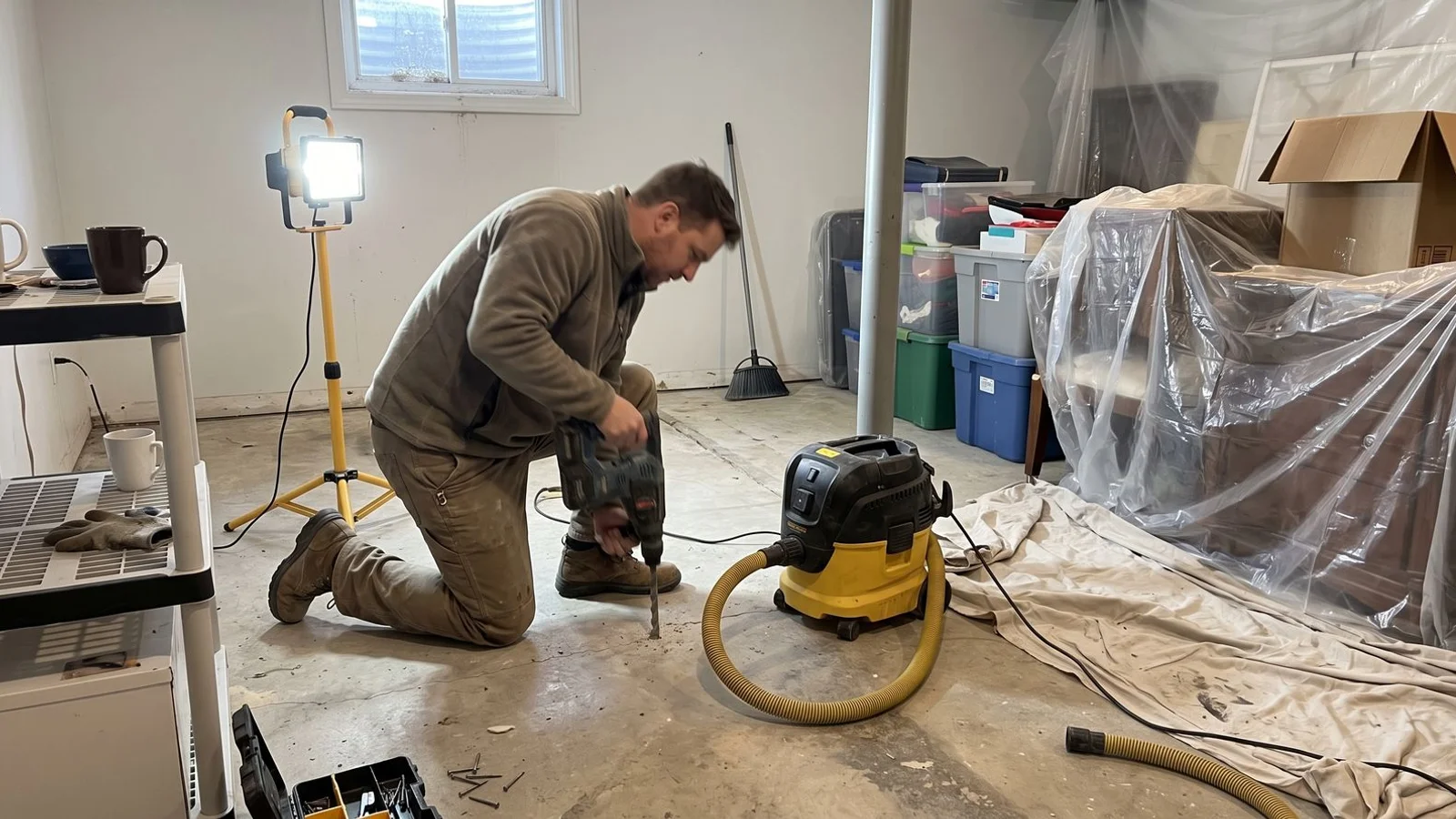
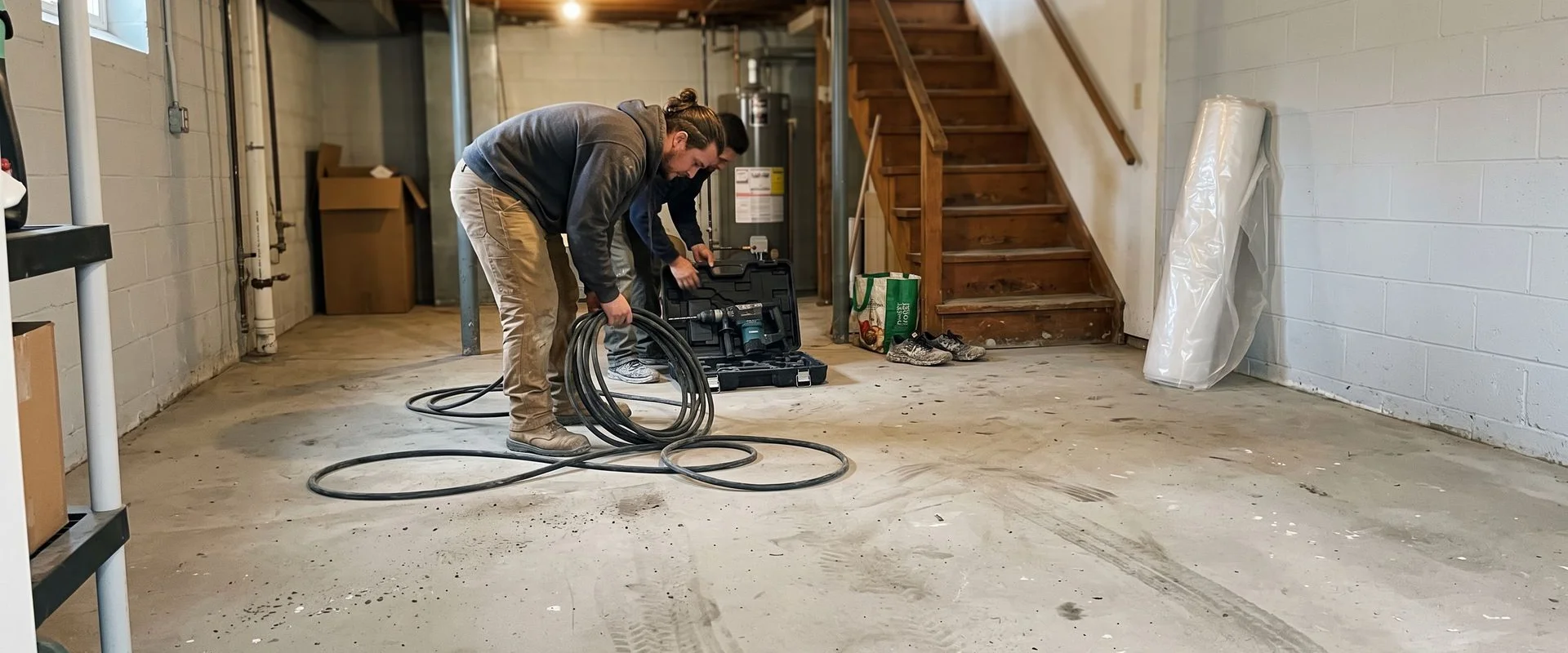
The setup requires only clearing the immediate working area and tossing protective covers over nearby furniture. We attach specialized HEPA dust extraction vacuums directly to our drills before the first hole is ever made, because controlling airborne silica dust matters far more inside a finished basement than it does out on a driveway.
Here is how the fast, clean indoor process works:
- Small, 5/8-inch ports about the size of a penny are drilled through the concrete.
- We pump the lightweight polyurethane beneath the floor to fill the hidden cavity.
- The expanding foam gently raises the slab in tiny increments back to the surrounding level.
- Our technicians patch every port flush with the surface before cleaning up the site.
Your basement space goes right back into normal use that exact same day.
When an Interior Slab Isn’t a Lifting Job
Certain floor issues simply cannot be repaired with foam injection. We regularly inspect older Hartford homes built in the 1950s and 1960s where the underlying problem requires a different approach.
The lifting process must be halted in two specific situations:
- Active Structural Failure: Lifting the floor changes nothing if the house’s footings or foundation walls are actively sinking. Our technicians will clearly explain the situation and recommend a structural specialist instead of quoting you for a useless lift.
- Shattered Concrete: A floor that is heavily shattered into small pieces, delaminating, or actively crumbling apart cannot be lifted. We know polyurethane foam provides incredible lifting power, but it does not act like glue to hold severely broken concrete together.
An active water leak washing material out from underneath the home also requires pausing the job. We require that the active drainage or plumbing leak be fixed first, or the empty cavity will just form all over again.
A completely free, written assessment is provided before you commit to any repair plan. Our transparency ensures you always get the exact solution your home actually needs.
If you suspect your home needs professional basement & interior slab lifting, give our team a call. We are ready to help you restore your floors with a permanent, guaranteed fix.
How Much Does Interior Slab Lifting Cost?
Interior slabs are quoted on the same three measurements as exterior work. What's different indoors is access, dust control and the finish on the floor. All of that gets scoped at the inspection rather than discovered on the day.
Utility Area
A settled section around a drain, water heater or mechanical run.
Smallest scope
- Working area cleared, rest of the basement untouched
- Dust extraction at the drill
- Household stays in the house
Trench Line Settlement
The dip that follows an old plumbing trench across the floor.
Most common
- Full run of the settled line lifted back to level
- Void filled beneath the trench backfill
- Ports patched flush on a finished floor
- Diagnosis of whether water is still active underneath
Full Room
A whole basement or interior room brought back to a single level.
Largest scope
- Target level set against door thresholds and fixed points
- Complete void fill across the lifted area
- Doors, framing and appliance alignment restored
What Moves the Number on Your Quote
- Square footage of the settled area
- Lift height measured against the surrounding floor
- Void volume beneath the slab
- Floor finish, whether bare, painted, tiled or covered, and how ports are patched
- Access route through the property for equipment and hoses
- How much has to be cleared from the working area
Custom per-project quote based on square footage, lift height and void volume.
The inspection and the quote are free, and the quote is the price.
Why Choose Us for Interior Slab Lifting?
A Berlin-based crew, a method built for Connecticut ground, and a written recommendation you can hold us to.
Stay in Your House
The work is contained to the slab area being lifted. In the great majority of interior jobs the household carries on normally throughout.
Dust Under Control
Drilling is the dusty step and it's short. Extraction at the drill and containment around the working area handle the bulk of it.
Slab or Foundation, Answered
A dropping basement floor worries people badly. We check the walls, frames and openings and tell you plainly which problem you actually have.
Days, Not Weeks
Breaking out and repouring an interior slab means hauling debris through the property and losing the room for a week or more. A lift is hours.
Patched to the Finish
On painted, sealed or covered floors the ports are patched flush and effectively disappear. We agree the approach before drilling.
We Refer When We Should
If the inspection points to footing or wall movement, we say so and tell you what you need instead. We lift slabs. We don't underpin houses.
Our Interior Slab Lifting Process, Step by Step
Most residential jobs are a few hours on site from arrival to cleanup.
Diagnose First
Before anything else we establish whether this is a slab problem or a structural one. Those need different specialists and different money.
Contain and Clear
Only the working area gets cleared. Contents nearby are covered and dust extraction is set up before the first hole.
Fill and Lift
Polyurethane fills the cavity beneath the slab, then raises it in monitored increments back to the surrounding level.
Patch and Return
Ports patched flush to the finish, area cleaned, and the room back in use the same day.
Want a real number for your interior slab lifting?
Free on-site inspection, free written quote, and an honest answer on lifting versus replacing.
Interior Slab Lifting: What the Job Looks Like
Click any image to enlarge.
Lifting an Interior Slab vs Breaking It Out
| Factor | Break Out & Repour | Polyurethane Lifting |
|---|---|---|
| Room out of use | A week or more | Same day |
| Debris through the property | Hauled out by hand or barrow | None |
| Dust generated | Demolition-level | Drilling only, extracted |
| Household during works | Disrupted, sometimes displaced | Normally unaffected |
| Existing floor finish | Destroyed | Kept, ports patched |
| Cost | Full replacement pricing | A fraction of tear-out |
Interior Slab Lifting: Questions We Get Asked
Does a sinking basement floor mean my foundation is failing?
Usually not. A basement slab is a non-structural floor poured over fill. It carries itself, not the house, and it isn't a load-bearing wall or a footing. When plumbing-trench backfill consolidates or groundwater washout moves fines out from underneath, the floor drops while the walls stay exactly where they were. That's a serviceability problem, not a structural one. What would point elsewhere is stair-step cracking in block or brick walls, out-of-plumb door frames, or doors sticking on the floor above.
Can we stay in the house during the work?
In most cases yes. The work is contained to the slab area being lifted, drilling is brief, and there's no demolition. We'll tell you at booking if anything about your specific job changes that.
How much dust is there really?
Drilling is the dusty step and it lasts minutes, not hours. Extraction runs at the drill and the working area is contained, so what escapes is a fraction of what breaking out a slab produces. Contents nearby get covered before we start.
Why does the floor dip in a straight line?
That almost always follows a plumbing trench. When the original drainage was run under the slab, the trench was backfilled and never compacted the way the surrounding ground was. Decades later that strip has consolidated and the floor above it has followed, which is why the dip is linear rather than circular.
Will the patched holes show on my finished floor?
They're small and patched flush. On painted, sealed or covered floors they effectively disappear once the area is touched up. If your basement floor has a coating or covering, tell us at the inspection and the patching approach gets agreed before any drilling.
Does a settled slab mean there's water under my house?
Often groundwater washout has moved fines out from under the slab at some point, yes. Whether it's still active is a separate question and one the inspection checks, because if water is still moving under there, filling the void without addressing the source just buys time.
How much of the basement do I need to clear?
The working area and enough room around it to move safely. Usually not the whole basement. We'll tell you exactly what needs shifting when the job is booked so there's no surprise on the day.
Do you fix foundations?
No. We lift slabs. If the inspection points to footing or wall movement we'll say so plainly and tell you what kind of specialist you need instead. Taking money for a slab lift on a house with a structural problem would be dishonest and it wouldn't fix anything.
Should I get a structural engineer?
If you're seeing stair-step cracks in block work, out-of-plumb window or door openings, or doors sticking upstairs, yes. Anything that suggests a load-bearing wall or footing has moved is beyond a slab question and worth an independent opinion before anyone quotes you for anything.
Can appliances and utilities stay in place?
Usually. Water heaters, furnaces and utility runs get worked around rather than moved wherever possible, and we identify what's under the slab before planning the port pattern. Anything that genuinely has to be shifted gets flagged at the inspection, not on the day.
Still have a question?
The on-site inspection answers it properly. We look at your actual slab and put the answer in writing, and it's free either way.
Related Services
Void Filling
Filling the washed-out cavity beneath a slab and stabilizing weak subgrade so settlement stops recurring.
Garage Floors
Lifting sunken interior garage slabs, cracked and stepped sections, and floors that have thrown doors out of alignment.
Joint Sealing
Sealing control joints and cracks so surface water stops washing out the base beneath the slab.
Ready to Book Interior Slab Lifting?
Free on-site inspection and written quote across Hartford County. If your slab isn't a lifting candidate, we'll tell you that instead of selling you one.
- No demolition, landscaping intact
- Same-day use on most jobs
- CT registered & insured