
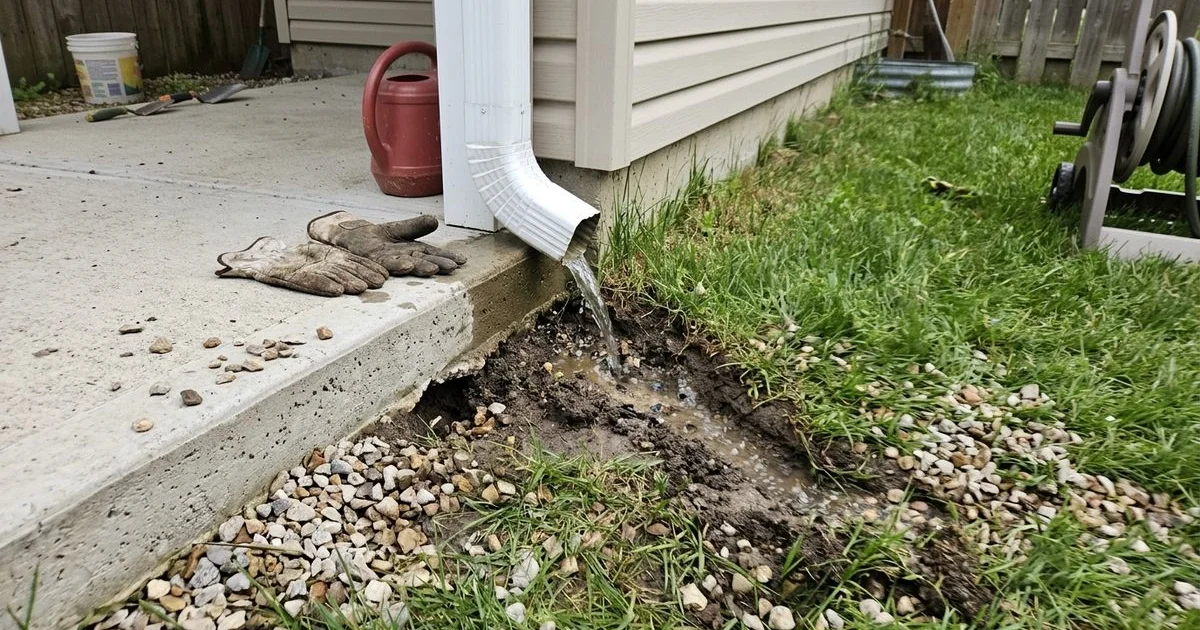
We often find that addressing the root cause of concrete settlement is the cheapest part of our entire visit.
The main issue is usually a downspout washing out a concrete base, a sunken splash block, or a small low spot holding water next to the foundation. Our team prefers to point out these easy fixes rather than selling you the same repair job twice down the road.
Void filling and stabilization handles the immediate cavity under your concrete, while this guide covers exactly how to prevent that void from returning.
How Much Water a Downspout Actually Moves
Our team at CT Pro Concrete Leveling lifts sunken concrete back into place across the Hartford area instead of tearing it out. A single inch of rain falling on a 1,000-square-foot roof section creates 623 gallons of runoff. We see homeowners severely underestimate this sheer volume of water hitting their property.
Recent 2025 climate data shows our region receives about 49 inches of annual precipitation. Our experience confirms that tens of thousands of gallons channel through just two or three downspouts every single year. This massive volume of water arrives at one small patch of ground within minutes during heavy storms.
We see that putting that discharge point just eighteen inches from the edge of a concrete slab guarantees long-term trouble. A constant flow acts like a slow excavation process beneath your driveway. Our daily work proves exactly how destructive this runoff becomes over time, and here is a quick breakdown of the math:
- Single Storm (1 inch): 623 gallons pouring onto one narrow soil patch.
- Annual Runoff (49 inches): Over 30,500 gallons eroding the base per 1,000 square feet of roof.
- Long-Term Damage (15 years): Nearly half a million gallons washing out the vital supporting layers.
The consequences of this slow excavation appear in our schedule every single day. We know that steady removal of material is exactly what causes drainage causing concrete settlement.
What Erosion Looks Like on the Surface
We always look for surface evidence before making any concrete repair recommendations. You can usually spot the signs of a downspout washing out a concrete base without doing any digging. Our technicians look for these specific red flags during every Hartford area property assessment:
- A channel or gully at the slab edge: Constant discharge cuts deep trenches into the soil, which are often hidden under overgrown grass.
- Soil washed onto the slab: Fine sand and silt get carried out from under the concrete and deposited on top after heavy rain.
- A splash block that has sunk or tipped: The ground beneath the block eroded away, forcing the device to direct water somewhere else entirely.
- Mulch or gravel migrating away from one spot: Loose material always travels the exact path the water takes.
- A slab edge that is visibly undercut: Advanced erosion cases reveal a literal gap between the ground and the bottom of the concrete.
These visual clues indicate severe damage to the hidden base underneath. We strongly suggest addressing these flow paths before scheduling a leveling service.
Negative Grading
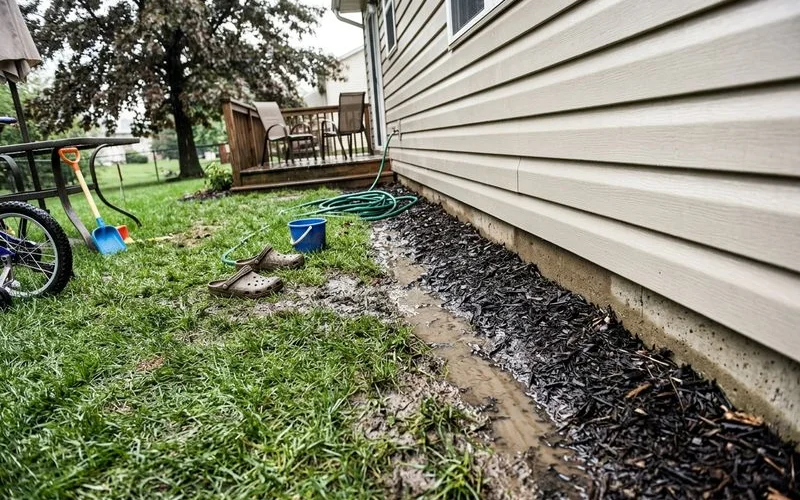
We find that negative grading concrete issues are often invisible to the untrained eye. The ground must always slope away from a building to prevent roof runoff slab damage. Our current building standards highlight this urgency, as the 2021 International Residential Code requires a minimum fall of 6 inches within the first 10 feet.
Backfill settles significantly over the years, and normal landscaping projects slowly raise the soil level against the house. We highly recommend keeping a few critical rules in mind when fixing these slopes:
- Use the right material: Choose dense, compacted fill dirt rather than porous topsoil.
- Measure the drop: Ensure that 6-inch fall stretches at least 10 feet out from the foundation.
- Watch the flow: Check the actual water paths during an active rainstorm, not just when it is dry.
Surface water drains directly toward the foundation once the yard grading becomes flat or reversed. Our crews read the landscape carefully to spot these hidden drainage problems. Water draining toward the house covers the exact slab-tilting effects of this specific issue, and what causes voids under a concrete slab explains how that washed-out material turns into a cavity in the first place. We consider proper slope correction to be a vital afternoon project for any homeowner.
Roof Valleys and Concentration Points
We pay special attention to roof valleys because they act like massive funnels during a storm. A valley concentrates runoff from two distinct roof planes into one highly pressurized stream. Our crews frequently see these areas discharging over porch roofs without any gutters beneath them.
This setup dumps a huge volume of water onto one narrow strip of soil. We always advise homeowners to look straight up if they notice a settled patio with no obvious downspout nearby. A concentrated roof valley is usually the culprit causing that localized erosion.
Our comprehensive repair approach pairs specific drainage corrections with professional concrete leveling. Here is a breakdown of common issues and their expected repair efforts:
| Drainage Problem | Recommended Correction | Material & Effort Estimate |
|---|---|---|
| Downspout discharging at the slab edge | Add an Amerimax StealthFlow extension | $15 part, 15-minute setup |
| Sunken or tipped splash block | Relevel the base or swap for NDS corrugated pipe | Under $20, very quick fix |
| Negative grading near the house | Build up slope with fill dirt (6 inches per 10 feet) | An afternoon of labor |
| Roof valley discharging without a gutter | Install a gutter system or a high-capacity diverter | Requires a gutter contractor |
| Open control joints | Apply Sikaflex self-leveling polyurethane sealant | Cheap, often done during our lift |
| Slab pitched toward the house | Re-pitch the concrete by lifting the base | Our specialty service |
We consider this chart an essential checklist for protecting your property. These simple corrections keep the soil dry and stable for years.
Sealing the Joints Is Part of This
We consider open control joints to be hidden hazards for your concrete base. Every storm sends water sitting on the slab directly into the open joint rather than off the edge. Our team knows this continuous drainage carries fine soil particles away, leaving a damaging void behind.
The freezing New England winters then turn that trapped water into ice, which levers the joint wider every year. We rely on high-quality materials to stop this cycle permanently. Commercial-grade products like Sikaflex self-leveling polyurethane sealant provide the most durable, flexible barrier against heavy rain.
Our preferred approach tackles this issue immediately after leveling. Here is how joint sealing protects your investment:
- Blocks surface water: Forces rain to run off the slab edge instead of through the middle.
- Prevents ice expansion: Stops winter freeze-thaw cycles from cracking the panels.
- Preserves the base: Keeps the freshly stabilized soil dry and intact.
Our crews normally complete this crucial sealing process during the same visit as your concrete lift. Joint sealing is the most affordable preventive measure available for Connecticut flatwork. We ensure this final step locks out the moisture and protects the base we just stabilized.
The Order to Do Things In
We follow a very specific sequence when treating a settled slab alongside a drainage issue. Sequence dictates how successful the final repair will be. Our structured approach ensures you aren’t paying for a temporary fix.
- Correct the obvious water paths first or at the same time: Snap-on tools like a basic Amerimax downspout extension cost very little and stop the ground from getting wetter before the lift.
- Fill the cavity and lift the slab: The corrected level and pitch have a genuine reason to hold once the water is redirected.
- Seal the joints on completion: Closing the last route in happens during the exact same service visit.
Doing the slab work while a downspout still discharges at the edge wastes money. We know that a continuous flow of water attaches a fast countdown to your concrete repair. An uncorrected flow path will eventually wash away the new support material.
Our comprehensive inspection identifies exactly what feeds the void so you can fix it. That part of the assessment costs nothing and serves as a highly valuable roadmap for your property. We always put these specific drainage recommendations in writing alongside your leveling quote.
What to Check Before You Call Anyone
Walk the house during the next heavy rain. Ten minutes out there tells you more than any report.
Look at where each downspout lands, whether the ground beside the slab falls away from the house, and where water is still standing once the rain stops. That is usually enough to find what is washing the base out from under a driveway or patio.
If a slab has already dropped, redirecting the water is only half of it. The cavity underneath has to be filled as well, or the slab keeps going. The inspection and the written quote are free, and we’ll tell you exactly what to correct so you aren’t paying for the same repair twice.