
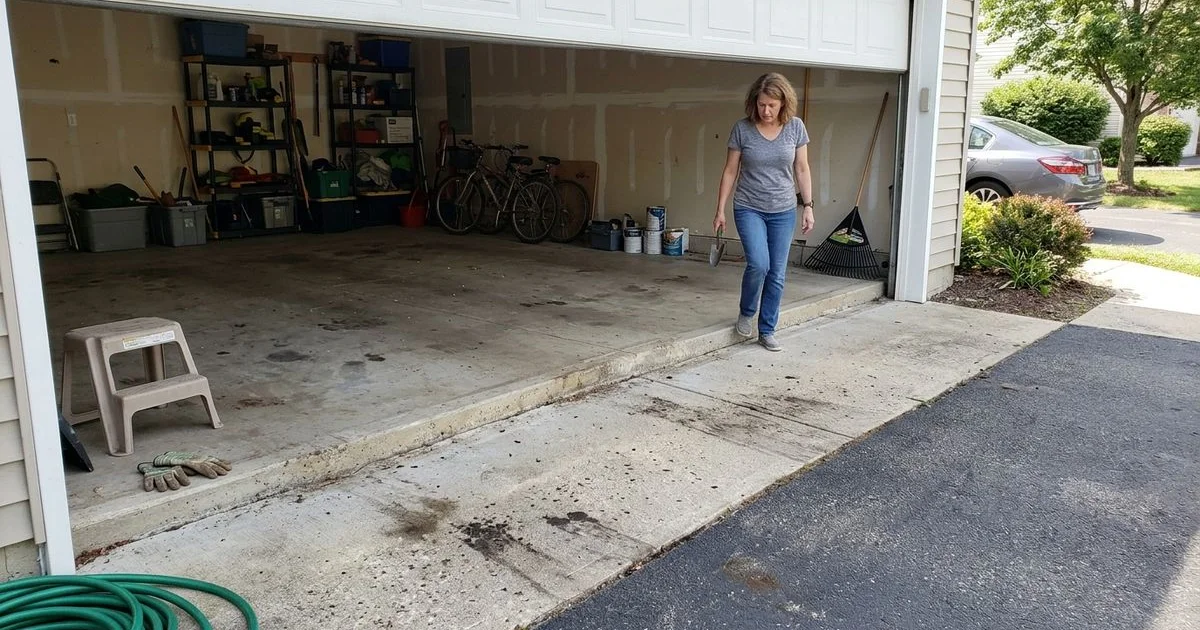
The Most Common Driveway Failure in Hartford County
We see the same garage apron settlement repeating across Hartford County neighborhoods every single spring. That transition piece between your driveway and the garage floor is highly vulnerable. It drops more often than any other section, and it almost always fails first.
It is not bad luck or poor original workmanship.
Our CT Pro Concrete Leveling crew handles this predictable failure regularly, especially in towns with older housing stock like West Hartford and Glastonbury. Many property owners assume they need a costly tear-out right away. Fortunately, driveway leveling handles this specific issue as a routine, same-day job.
We are going to break down the exact soil factors causing this common drop. Then, I will outline the modern polyurethane repair process that permanently restores the slab.
Why That Particular Slab
When your house was built, the ground around the foundation was excavated and then put back. That backfill soil gets graded and built over. Contractors rarely compact this dirt to the density of the undisturbed earth around it, meaning the concrete apron sits directly on a loose foundation.
Our regional climate makes this weak base even more unstable. The 2022 Connecticut State Building Code requires footings to extend 42 inches deep specifically to bypass our severe frost line. That means you have three feet of loosely packed soil shifting during every single freeze and thaw cycle.
You end up with the least supported ground on the entire property facing immense pressure. Three distinct forces push the slab downward simultaneously, causing rapid garage apron settlement:
- Heavy Vehicle Traffic: Every car crosses this exact spot daily, applying thousands of pounds of pressure.
- Roof Runoff: Gutters and rooflines frequently dump rainwater directly onto this joint.
- Frost Heave: The 42-inch Connecticut frost line causes constant expansion and contraction in the trapped moisture.
Our inspection team frequently finds that water retention accelerates this damage. Connecticut winters freeze the moisture trapped in that backfill, causing soil expansion and creating large voids when it thaws.
The apron slab drops well before the rest of the driveway shows any wear. If you want to understand the exact soil mechanics at play, Why driveways sink covers the underlying mechanism in much greater detail.
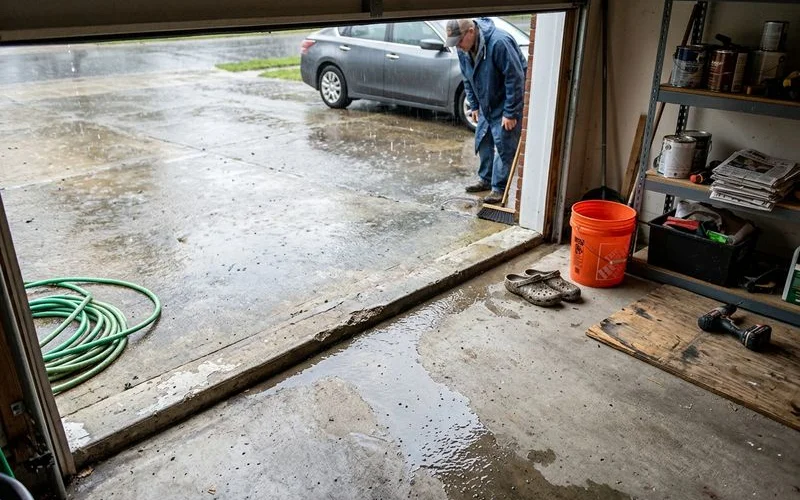
What You Actually Notice
Homeowners usually spot a driveway dropped at the garage door long before they realize the soil underneath has failed. The warning signs start small but quickly escalate into expensive damage if ignored.
Our technicians always check for four specific symptoms during a property evaluation. You should look for these same indicators:
- A step down from the garage floor: This is the clearest visual sign of an apron slab sinking. You feel a distinct jolt under your tires, and you can easily see a dark shadow line straight across the opening.
- A snowplow catching every winter: A stepped concrete edge creates the perfect lip for a plow blade to snag. Local plowing services usually find this hazard during the first December storm, which causes severe chipping to the concrete edge and damages the plow blade.
- Water running into the garage: This specific symptom turns a minor annoyance into a severe structural threat. Once the apron drops, it pitches back toward the building instead of sloping away, so rain and melting snow run directly over the threshold.
- A gap under the garage door: Sometimes the exterior apron and the interior slab sink simultaneously. This leaves visible daylight under a fully closed door, welcoming pests and freezing drafts. If you notice a garage entrance concrete gap like this, garage floor leveling is the related read you need.
Why Water in the Garage Matters Beyond the Nuisance
Water crossing your threshold rarely stops at the door. It runs straight under the interior slab, seeking the path of least resistance through the compacted soil.
Our foundation experts see this create a compounding problem. Once the water gets under the interior concrete, it does the exact same thing it did outside by carrying fine soil particles away and enlarging the underground cavity. That erosion process is exactly how a simple exterior settlement becomes a major interior flooring failure.
We sound both areas during every inspection to map the full extent of the void. Both slabs share the exact same water path beneath the surface, which is why treating them together in one visit is significantly cheaper than scheduling a second repair later.
| Visual Symptom | What Is Happening Underneath | The Eventual Consequence |
|---|---|---|
| Step at the garage door | Foundation backfill has consolidated | Snowplow snag and harsh vehicle jolts |
| Apron pitching inward | The slab rotated backward as it dropped | Standing water runs into the garage |
| Gap under closed door | The interior concrete floor has dropped | Weather seal failure, pest entry, and snow ingress |
| Hollow sound on the apron | A significant erosion cavity is present | Further concrete dropping under heavy load |
Fixing It
An apron lift remains one of the most straightforward repairs in the industry. The target level is completely unambiguous. The concrete must sit perfectly flush with the garage slab, leaving absolutely no judgment call about how high to go.
Our repair method utilizes advanced polyurethane foam injection rather than outdated mudjacking. Modern high-density structural foam weighs just 2.0 to 4.0 pounds per cubic foot, compared to the 100-plus pounds that traditional mudjacking slurry adds to your already failing soil. This lightweight approach prevents future settlement while providing massive compressive strength.
We map the cavity, drill a precise pattern of small 5/8-inch ports, and inject the specialized polymer.
The Polyurethane Lifting Process
The injected polyurethane reacts and expands immediately to fill the hidden void. Once the cavity is packed tight, the expanding foam gently raises the slab back to the original garage floor level in carefully monitored increments.
Our technicians specifically focus on correcting the slope during this phase. Where the apron has rotated inward, the lift establishes a positive fall away from the building. This critical adjustment ensures rainwater runs down to the driveway again rather than pooling into your garage.
Fast Curing and Return to Service
The structural foam reaches 90 percent load-bearing strength in just 15 to 30 minutes. The apron can easily support a parked vehicle on the exact same day.
We patch the small injection ports with a color-matched cement, sweep the work area clean, and the job is completely finished. For most standard apron sections, this entire process requires a short morning visit rather than a full day of disruptive construction.
Worth Doing Early
An apron that has dropped half an inch requires a fast, inexpensive fix. The exact same apron left alone for three winters becomes a much larger, more complicated job with a second interior problem attached to it.
Our pricing data shows that leveling sunken concrete costs 50 to 70 percent less than a full replacement in Connecticut. But those savings disappear if you wait until the concrete shatters. Early intervention buys you choices, because a concrete slab caught while it remains structurally sound will lift cleanly and hold its shape.
The Risks of Delaying Repairs
A slab subjected to daily traffic jolts across a growing void will eventually snap. By the time someone finally inspects it, the concrete may have cracked into multiple jagged pieces. At that point, a complete tear-out and replacement becomes the only honest recommendation.
We always advise getting a professional assessment as soon as you notice the drop. If you see a step forming at the door, sounding the concrete now reveals the exact size of the hidden cavity. Our team provides a free inspection and a detailed written quote for the repair.
If the concrete is stable enough to wait another season safely, we will tell you that directly. Contact us today to schedule your site evaluation and stop garage apron settlement from destroying your concrete.